
Off-grid solar system packages with batteries cost $15k-$45k in 2026. Real pricing, LFP vs NMC chemistry, system sizing, and what installers won't say. Battery storage represents the largest expense in an off-grid system, often accounting for 30-40% of the total system cost. Your location. Designed for flexible installation, this system supports. ) 6,000W, 120V/240V split-phase output in one unit for power-hungry appliances. LFP battery prices dropped roughly 40% between 2022 and 2025 per NREL's Annual. Lithium Batteries Are Now the Clear Winner: Despite higher upfront costs, LiFePO4 batteries offer 6,000-8,000 cycles at 90-95% usable capacity compared to lead-acid's 1,500-3,000 cycles at only 50% usable capacity. With 2025 prices dropping 20% from 2024, the total cost of ownership now favors. Hybrid Renewable Energy Systems (HRESs) are a practical solution for providing reliable, low-carbon electricity to off-grid and remote communities.
[PDF Version]
In digital transmission, the number of bit errors is the number of received bits of a data stream over a communication channel that have been altered due to noise, interference, distortion or bit synchronization errors. The developed scheme has been tested on optical fiber systems operating with a non-return-t -zero (NRZ) format at transmission rates of up to 10Gbps. There are so many different types of modulati n techniques scheme is recommended for. Abstract—The bit error rate (BER) is the percentage of bits that have errors relative to the total number of bits received in a transmission.
For such cables, we recommend using at least a 1. 5-inch conduit, and sometimes a 2-inch conduit may be necessary. It's important to consider not only the rigidity of the jacket but also the breakout point of the assembly, where the strands exit the jacket and are encased in. Whether you're setting up a network in your home or installing fiber optic cables for a large-scale project, one crucial factor to consider is the conduit. The conduit protects the fragile fiber optic cables from environmental factors and physical damage, ensuring their longevity and optimal. Calculation Method 1 – Calculate the minimum conduit size required for a specific number of cables. " To determine the size of. Premise innerduct is a flexible, non-metallic, corrugated raceway that has long been an essential conduit system for protecting fiber optic cables installed throughout telecommunications spaces and pathways. It can help isolate fiber to prevent damage from other cables or trades working in those. This calculator will allow you to find the fill ratio using one, two, or three cables within the conduit.
[PDF Version]
This article examines common methods for installing indoor optical fiber and outlines the requirements for the job. OPGW, all-dielectric self-supporting cable, and OSFP 400G transceivers are part of modern SDGI, so we'll also discuss it. These fibers are typically made of glass or plastic and are designed to transmit data over longer distances and at higher bandwidths than other forms of communication cables. For various reasons and purposes, fiber optic cables have. North America has the biggest revenue share at 35%. Asia Pacific is growing very fast. Leave extra space for future changes. Future-Proofing: Indoor fiber optic infrastructure is a key element of future-proofing. Optical fiber cables designed for the indoors are integrated with these important characteristics: Exceptional Flame Resistance: Overall performance is not compromised by emergencies.
Data centers use electrical cables to provide power and transmit data. The jacket and insulation materials of electrical cables are usually made with plastics and could be the major source of combustible materi.
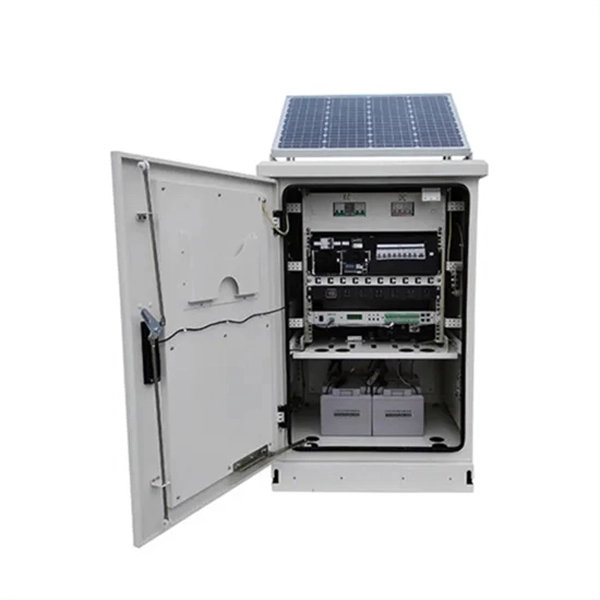
Liquid cooling BESS systems circulate coolant—typically water or glycol solutions—through the system to absorb and remove heat. This enables rapid heat dissipation and precise thermal control, making liquid cooling an ideal solution for large-scale, high-voltage energy. A Battery Energy Storage System is an integrated electro-mechanical and digital system that stores electrical energy in batteries when there is a surplus of energy and delivers it back to the grid or load when required or during peak load periods. The energy is stored in chemical form and converted into electricity to meet electrical demand. This article presents a comprehensive guide covering the design, components, control strategies, applications, and deployment challenges of. Figure 1: A BESS is a large energy storage system.
Contact us for competitive quotes on any of our power communication and smart grid products
Get a Quote