
A Free-to-Air (FTA) DVB-T2 box is a digital television receiver that enables users to access broadcast channels without a subscription. ” It describes a satellite system that became popular in the 1980s as an alternative to cable or antenna, before DIRECTV and DISH existed. With this system, you pointed the dish using motors and gears at multiple different satellites. Typically, the dish itself was large. Free-to-air (FTA) distribution is one of the principal means of fulfilling the universal service obligation and in many countries it is a legal obligation for PSM organisations. Federal Transit Administration Organizational Chart, including offices and divisions.
Fiber optic - A fiber optic light guide consists of a non-coherent bundle of optical fibers. The fibers at each end of the bundle are tightly compressed, cut perpendicular to the axis of the fibers, and polished to permi t light to pass into and out of the bundle. Light guides are sometimes called light pipes (lightpipes). Such fibers are widely used in fiber-optic communication, where they permit transmission over longer distances and at higher bandwidths (data transfer rates) than. Optical waveguides such as optical fibers typically trap and guide light within rectangular or cylindrical boundaries over useful distances. Rectangular shapes are easier to implement on integrated circuits, while cylindrical shapes are used for longer distances, up to 100 km or more. They have a central core surrounded by a concentric cladding with slightly lower (by ≈ 1%) refractive index. The customer-specific products are used, among other things, in power plant monitoring, medical ptic components into their overall solutions.
[PDF Version]
Distance relays, also known as impedance relay, differ in principle from other forms of protection in that their performance is not governed by the magnitude of the current or voltage in the protected circuit but rather on the ratio of these two quantities.OverviewIn, a protective relay is a device designed to trip a when a is detected. The. Electromechanical protective relays operate by either, or. Unlike switching type electromechanical with fixed and usually ill-defined operating voltage thresholds. Electromechanical relays can be classified into several different types as follows: "Armature"-type relays have a pivoted lever supported on a hinge or knife-edge pivot, which carries a moving contact. These relays may.
When vertically installed, the height of cable trays from the ground should not be lower than 1. If the above standards cannot be met, metal covers must be added for protection. This standard specifies the requirements for nonmetallic cable trays and associated fittings designed for use in accordance with the rules of the Canadian Electrical Code (CEC) Part 1, and the National Electrical Code® (NEC). It also helps reduce the risk of. National Electrical Code (NEC) specifies the capacities of cables rated at 2000 volts or less in cable trays.
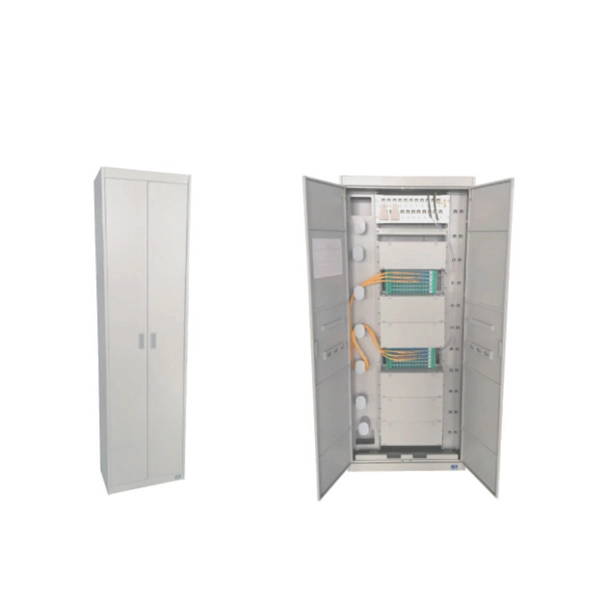
A main drawback is the complexity of testing and troubleshooting, as well as the need for detailed GIS records to accommodate splitter placement. Training can also be challenging for those unfamiliar with this architecture. Centralized splits typically use higher fiber count cables than distributed split networks, increasing both material and splicing labor costs. Another disadvantage is the aesthetic impact of the PON. A GPON splitter is a passive optical device that takes a single fiber input and splits it into multiple outputs, typically in ratios like 1:2, 1:4, 1:8, 1:16, 1:32, and 1:64. The splitting process introduces signal attenuation, making placement strategy critical for network performance. PON, developed in the mid-1990s, was originally designed to allow internet service providers (ISPs) to deliver broadband triple-play services (data, voice, and video) to residential users. By dividing a single optical signal from a central Optical Line Terminal (OLT) into multiple outputs for Optical Network. Morgan said the downside is that there is “a little bit less ability to troubleshoot” because the terminals are not all in one place. “This is becoming more popular for.
[PDF Version]
In, a single-mode optical fiber, also known as fundamental- or mono-mode, is an designed to carry only a single of light - the. Modes are the possible solutions of the for waves, which is obtained by combining and the boundary conditions. These modes define the way the wave travels through space, i.e. how the wave is distributed in space. Waves can have the same mode but have different frequencies. This is the case i.
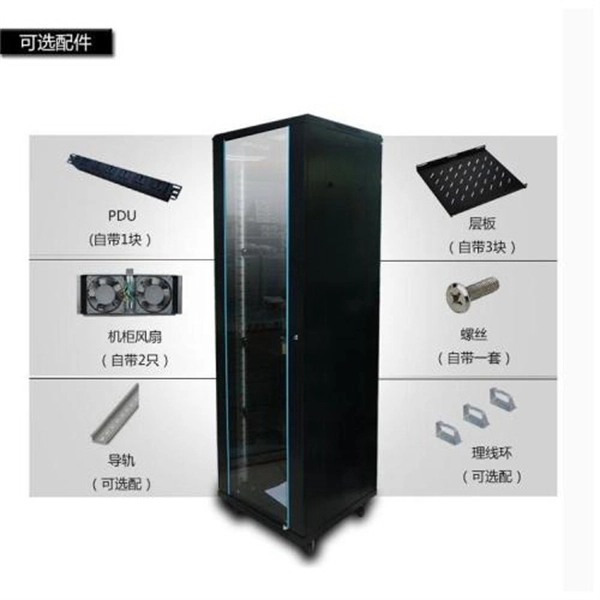
The AC Distribution Box (ACDB), also called the AC Distribution Board, is a key part of an Electrical Distribution System. Its main job is to control and send out alternating current (AC) electricity from a main source to different circuits and devices in a building or installation. In the AC power system, as an important part of the power equipment, the AC distribution box mainly plays the following roles: Power distribution: The AC power distribution box distributes the high-voltage AC power from the. A distribution box is an important electrical device mainly used for the distribution and control of electric energy in a power system. Generally, the incoming line is AC 380V power supply. There are one or more main air switches in the distribution box.
Electromechanical protective relays operate by either, or. Unlike switching type electromechanical with fixed and usually ill-defined operating voltage thresholds and operating times, protective relays have well-established, selectable, and adjustable time and current (or other operating parameter) operating characteristics. Protection relays may use arrays of, shaded-pole, magnets, operating and restraint coils, solenoid-type operators, telephone-relay contacts.
A squirrel is a type of animal that has a naked - tailed, meaning its tail is without fur. What is "Naked Tail" D&O Insurance? In insurance parlance, if you insure a particular exposure, you're covered. If you're looking for a policy that covers something that's never been covered before, you're. naked. That's the situation many privately held, small and middle. There really is such a thing as “naked tail” in M&A. In my previous blog, I discussed the differences between D&O tail insurance and reps and warranties insurance (RWI or R&W. This is where Extended Reporting Periods (ERP), commonly referred to as Tail Policies, become critical. Because D&O insurance is written on a claims-made policy form, when coverage terminates, it extinguishes the opportunity to report. Imagine a cute little creature scurrying across the forest floor, with a long and slender body, and a peculiar feature that sets it apart from other animals.
[PDF Version]
Efficiency and optical power output of a laser diode goes up with decreasing temperature. A laser diode (LD, also injection laser diode or ILD or semiconductor laser or diode laser) is a semiconductor device similar to a light-emitting diode in which a diode pumped directly with electrical current can create lasing conditions at the diode's junction. It works on the same basic principle as an LED, but with an internal structure that forces photons to align in phase and direction, producing coherent laser light instead of the. When operated beyond their maximum ratings, laser diodes can be instantly destroyed or degraded, significantly reducing product reliability. Therefore, it is vital not to exceed the specified maximum ratings even momentarily. In particular, the following points should be noted. (1)Elements may be. A laser produces a highly concentrated beam of light energy. Once known, the next set of choices revolves around mounting a laser diode and choosing the appropriate drivers, regulators, and choosing the placement of the diode within the lab.
[PDF Version]Contact us for competitive quotes on any of our power communication and smart grid products
Get a Quote