
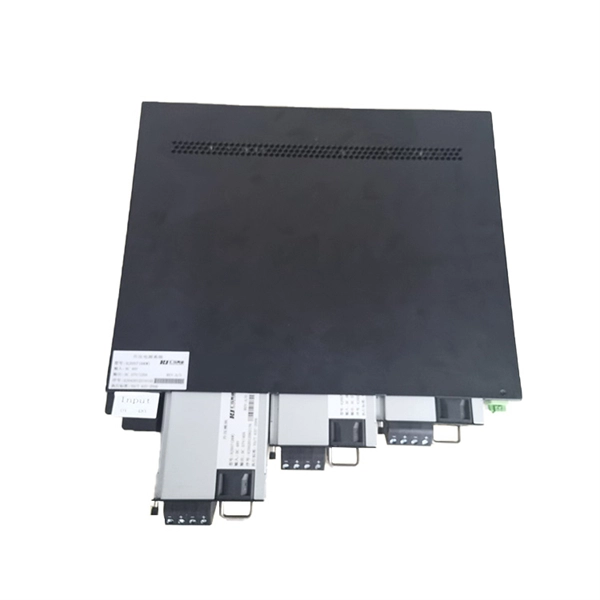
With 16 SFP ports, it is ideal for fiber rings, zone aggregation, and long-distance backbone interconnects, while 8 Gigabit RJ45 ports handle local copper access. It built-in power supply and 1U/19” cabinet installation. OVERVIEW The ONV33168FM is a gigabit L2+ managed Ethernet fiber switch independently developed by ONV. trafic on all ports at line rate without any packet loss. The total non‐blocking throughput is up to 160 Gbps. For fiber connectivity, it features 12. Omada 16-Port 10GE SFP+ L2+ Managed Switch. As a 10G switch with full SFP+ ports that seamlessly integrates into the Omada Software Defined Networking (SDN) platform, SX3016F allows for remote and centralized management, anywhere, anytime. The EX3024F Intelligent Ethernet Fiber Aggregation Switch offers zero-touch deployments, policy-based automation, auto device profiling and segmentation, and a non-blocking. NEU308164CGM is designed for industrial convergence where many fiber links must be aggregated into a manageable distribution layer. Faster replacement and priority support, covered for 5 years. High-performance 10G SFP modules for optimal connectivity.
[PDF Version]
The PoE switch supplies power, the Ethernet cable carries both power and data, and the device receives everything through one connection. This is the most straightforward PoE configuration and is commonly used for powering devices like access points, cameras, and VoIP. Explains how PoE-capable switch identify the power requirement and how PoE works on a switch. ) via Ethernet cables, enabling them to communicate over a Local Area Network (LAN). Unlike simple hubs that broadcast data to all ports, switches create a direct. Therefore, everyone is concerned about whether PoE switches will affect speed. PoE calculation is done during initial link negotiation. 3af standard, which specifies the maximum power delivered over Ethernet cables. 4 watts of power per port, while PDs can consume up to 12.
In this video, I show how to use a MOSFET as a touch-activated ON/OFF switch to power a laser diode — no buttons, no mechanical contacts. Just a simple, clean and smart circuit. more Control a laser module with just a fingertip!I am quite new to the Arduino business and up until now managed to create a Hexapod robot from a kit based on the Arduino Mega 2560, add Computer Vision and let him crawl around to find target objects. Now I want to destroy the target (in this case. So I just bought a laser diode with. They typically have three input pins: VCC (power supply), GND (ground), and SIG (signal). Other modules include only two pins: VCC (power supply) and GND. Another very popular option and sometimes cheaper is to buy/recycle a laser pointer directly and take advantage of the electronics, the head, and the casing, which integrated into a project look very good. We can find pointers of all colors for 1.
[PDF Version]
Three modes, Mode A, Mode B, and 4-pair mode, are available. (In the standard, these are discussed as two Modes, with the term 4-pair mode for both simultaneously.)OverviewPower over Ethernet (PoE) describes any of several or systems that pass along with data on cabling. This allows a single cable to provide both a data connection. There are several common techniques for transmitting power over Ethernet cabling, defined within the broader standard since 2003. The three t. The original PoE standard, IEEE 802.3af-2003, now known as Type 1, provides up to 15.4 W of power (minimum 44 V DC and 350 mA) on each port. Only 12.95 W is guaranteed to be available at the powered device as s.
The S7700 series provide service optimization features like wired and wireless convergence, unified user management, quality awareness (iPCA), H-QoS, and united security. They provide 100 GE ports, support SVF 2. 0, and have superb scalability and reliability. An active optical cable (AOC) is a fixed-length optical fiber with optical modules at both ends. It can be directly connected to an optical port on a device. Table 8-7 lists the models and attributes of. This document is intended for network engineers responsible for network design and deployment. The S7700 design is based on Huawei's intelligent multi-layer switching technology to provide intelligent service optimization methods, such as MPLS VPN, traffic. S7700 What's New Contents Issue 15 (2025-04-09) Copyright © Huawei Technologies Co.
Choose an SFP module based on the fiber optic cabling that will be connected to the network switches. Always. A fiber optic connector is a mechanical device used to align and join optical fibers, enabling light to pass through with minimal loss. Unlike fiber splicing, which is permanent, connectors allow for easy connection and disconnection of cables, making them ideal for maintenance and flexibility in. Fiber optic cabling is increasingly used to connect network switches and other datacom equipment, especially in long-distance and mission-critical applications. Most modern fiber-enabled network switches require an SFP transceiver module. In this article, we'll explain how to connect multiple Ethernet switches using fiber optic cables and the equipment required for this to work. Network topology refers to the way in which the links and nodes of a network are arranged in relation to each other.
[PDF Version]
The Aggregation Layer connects the Core Layer with Access Layer for data collection and distribution, typically by way of convergence layer switches that possess high bandwidths with minimal latency lags and bandwidth-limited latency settings; such switches serve to connect various. The Aggregation Layer connects the Core Layer with Access Layer for data collection and distribution, typically by way of convergence layer switches that possess high bandwidths with minimal latency lags and bandwidth-limited latency settings; such switches serve to connect various. MLAG (Multi-chassis Link Aggregation Group or Multi-chassis LAG) is a method to form the link aggregation group (LAG) among multiple devices for redundancy — When one of the switches fails, the system can still work. 1AX-2008 standard that defined LAG does not mention. An aggregation switch is a network device that consolidates traffic from multiple access switches, wireless access points, or other edge devices and forwards it to core switches or routers. By bundling multiple network connections into a single high-bandwidth link, aggregation switches help. Provides 1G, 2.
[PDF Version]Contact us for competitive quotes on any of our power communication and smart grid products
Get a Quote