
It explains how slot-type optocouplers work, how this module converts mechanical motion into clean digital pulses, how to calculate speed and RPM correctly, and how to interface it reliably with Arduino for motors, wheels, encoders, and rotating machinery. This tutorial is a comprehensive, practical guide to the Speed Sensor / Tacho Sensor (Slot-Type Optocoupler) (Leobot Product #245). Does anyone have any suggestions or idea? Thanks ypu for the help. Measure rotation speed (RPM) with Optocoupler and Encoder disk and Arduino - Quick and Easy! Beginner Protip 12 minutes 64,451 When building a robot car, it is important to control the speed of the rotation of the wheels. Slotted optocoupler speed modules, like these two models below: They work with optocoupler sensors—when something blocks them, they put out a high level.
The metering module converts the collected data into electrical energy values (in kWh) and records user electricity consumption. These systems enhance transparency in energy consumption and help identify inefficiencies or anomalies in real time. They support digital energy transition by integrating with cloud-based platforms and. Smart metering provides real-time insights into electricity, gas, heat and water usage, helping both consumers and service providers optimize energy management. But what exactly is smart metering? How does it work? And how can converters (also known as transmitters) transform your existing meters. What Are Key Components of a Smart Meter? Smart meters monitor energy use in near real-time, enabling informed decisions for sustainability and improved grid management. A smart meter represents a significant upgrade over traditional analog meters. Instead of simply measuring total energy. A smart meter is an electronic device that records information—such as consumption of electric energy, voltage levels, current, and power factor—and communicates the information to the consumer and electricity suppliers.
[PDF Version]
Operating at the physical layer of the OSI model, optical modules are core devices in optical fiber communication systems. Just as data centers begin their transition to 400G and 800G, the bar is rising towards the next evolution of 1. 2T, with the same demands for high performance and low power with minimal financial impact. They are. As an essential component of optical fiber communication, optical modules are optoelectronic devices that facilitate the conversion between optical and electrical signals during the transmission process. With the goal of promoting worldwide compatibility of optical internetworking products, the OIF actively supports and extends the work of national and international standards. But the industry isn't stopping there— 800G modules are already in production, 1. 6 terabits per second) is on the cusp of commercialization, and 3.
Photovoltaics (PV) is the conversion of into using that exhibit the, a phenomenon studied in,, and. The photovoltaic effect is commercially used for electricity generation and as. A employs, each comprising a number of,.

Serial to Fiber converters transform serial communication signals into optical signals transmitted over fiber optic cables, enabling long-distance, interference-free data transmission in industrial networks. As industries increasingly rely on long-distance data communication, serial to fiber converters have become essential, effectively connecting. Moxa's industrial-grade serial-to-fiber optic converters can convert RS-232/422/485 to optical fiber, which provides users with an easy and reliable way to communicate with their serial devices. A verification email has been sent to {0}. Please click on the link in this email to verify your address. DYMEC is renowned in the power utility and switchgear industries for decades of reliable service with our DYMEC 5844 line.
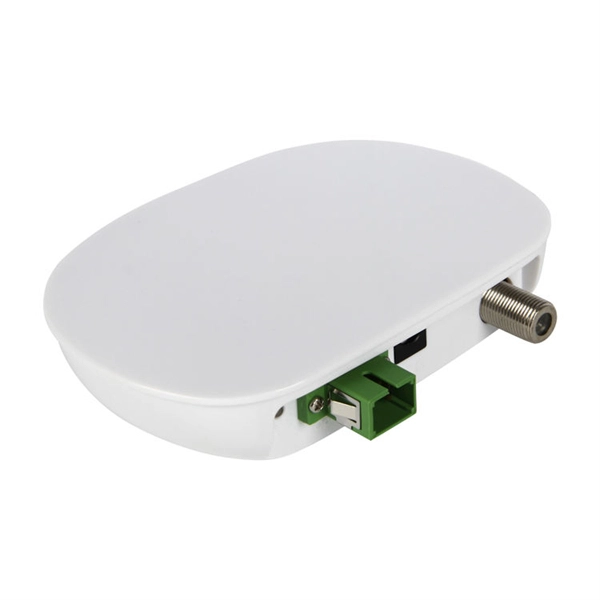
Utilizing LC connectors and operating at a 1310nm wavelength, it enables high-speed data transmission over single-mode fiber for distances up to 50 kilometers. This module provides a reliable long-reach fiber optic connection for Gigabit Ethernet applications. Still need. The GSFIBER-SFP-50K is a Gigabit Ethernet single-mode SFP transceiver. Mouser offers inventory, pricing, & datasheets for Singlemode 1550 nm Fiber Optic Transmitters, Receivers, Transceivers. The capacity ofSFS-7050-Z55module is1. All the managedFIB1-1000ESandFIB1-1000TSas well as. GBIC optical modules are equipped with the industry standard SC optical connector. The transceiver is able to work on9/125um single-modefiber for up to50Kmdistance using 1550nm wavelength.
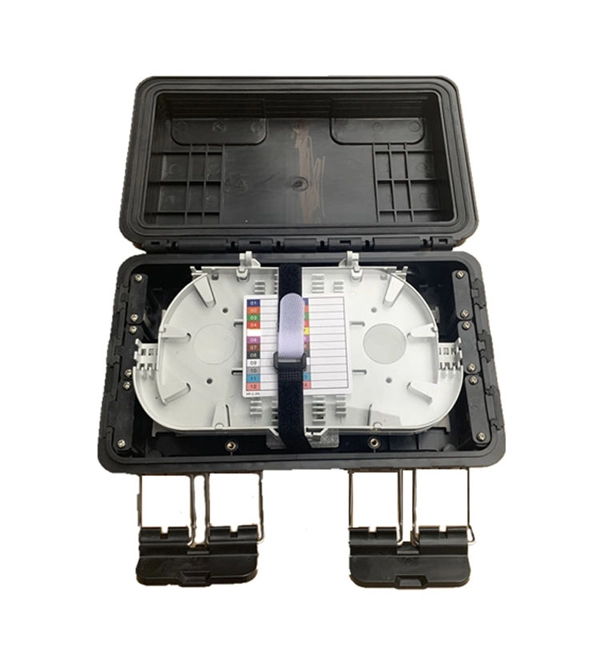
SFP transceiver modules almost always require two fiber optic cable strands. The secret lies in fiber optic technology, and understanding the basics—1-core, 2-core, Single Mode (SM), and Multi-mode (MM)—is key to mastering this field. Let's break down these terms in simple, clear language with practical examples. 2-core o In optical modules, "core". SFP (Small Form-factor Pluggable) is a compact, hot-pluggable network interface module used to connect network devices (switches, routers, firewalls) to fiber optic or copper cables. Think of it as the “translator” for your network equipment, converting electrical signals into optical signals. Single fiber modules (BiDi) use one fiber for both transmitting and receiving data. They are easier to set up and give steady communication. Download the Application PDF SFP transceiver.
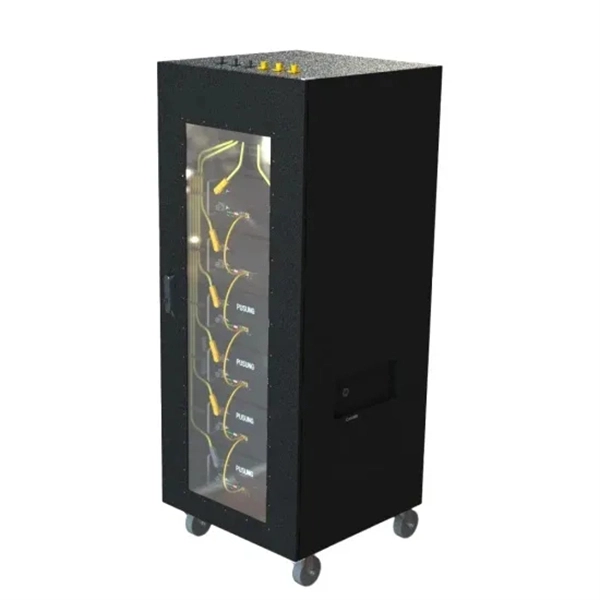
Optical module usually consists of a transmitter assembly (TOSA, containing a laser LD chip), a receiver assembly (ROSA, containing a photodetector PD chip), a driver circuit, an optoelectronic interface, a heat sink (some models), a housing, a pull ring and so on. Integrated circuits and reference designs help you create a smaller and faster optical module design used in high-bandwidth data communication applications. Whether you are creating a 100-Gbps or 400-Gbps, small form-factor pluggable (SFP) module, SFP+ transceiver, XFP module, CFP, X2/XENPAK module. Structure 5. Overview The optics module is comprised of Si photodiodes, optical components, and current-to-voltage conversion circuit. Its primary function entails converting electrical signals into optical signals. This assembly comprises a light source, such as a laser diode or a semiconductor light-emitting diode (LED), an optical interface, a. Average optical power refers to the optical power outputted by the optical module's transmitter under normal working conditions, which can be understood as the intensity of light.
[PDF Version]
SFP+ transceiver that supports 10G connections up to 300 m using multi-mode fiber with a duplex LC UPC connector. Power Consumption CLASS 1 LASER PRODUCT, IEC/EN 60825-1:2014 Do not look into the ends of the fiber optic cable or SFP module . Applicable to data center and campus networks, enabling cost-effective, efficient, and high-speed interconnection This product is currently unavailable in your region. Contact us for alternative solutions. As an industry-leading ICT infrastructure and industry solution provider, Ruijie offers. The industry-standard Cisco Small Form-Factor Pluggable (SFP) Gigabit Interface Converter (Figure 1) links your switches and routers to the network. Optical and copper models can be used on a wide variety of Cisco. GBC Photonics provides components for innovative and efficient optical networks. We offer a universal optical module that can be installed in any network device from any manufacturer. This mini-GBIC (Gigabit Interface Converter) module provides a metal housing to reduce electromagnetic interference and increases durability.
[PDF Version]
Optical modules are hot swappable, and you do not need to power off the switch when replacing optical modules. If an. ● Avoid allowing dust and other contaminants to enter the optical bores of the SFP or SFP+ module because the optics do not function properly when blocked by dust. A transceiver is a hot-pluggable device. There is no need to. This guide provides a clear, step-by-step explanation of how to install an SFP module correctly, based on real-world deployment practices. It covers critical preparation checks, proper insertion techniques, hot-swap and safety considerations, common installation mistakes, and practical. Power Off the Device: Although SFP modules are hot-swappable, it's a good practice to power off the device to prevent any potential damage or data loss.
Contact us for competitive quotes on any of our power communication and smart grid products
Get a Quote