
The Global Data Center Rack Market to grow at an 8. 3% CAGR, expanding from USD 4. 3 billion by 2030, driven by hyperscale data centers, cloud computing expansion, high-density server deployment, and colocation infrastructure demand, guided by Strategic. Data centres will be a core component for the digital infrastructure investment in the years ahead (Credit: Bain & Company) The global data centre sector is experiencing an unprecedented investment surge as AI fundamentally reforges the world's digital infrastructure. Source: Secondary Research, Interviews with Experts, MarketsandMarkets Analysis The global data center rack market is projected to grow from USD 5. 42 billion by 2030, at a CAGR of 12. 7%, driven by the rapid expansion of hyperscale, colocation, and edge data centers. 68 Billion. Nearly 100 GW of new data centers will be added between 2026 and 2030, doubling global capacity. The United States accounts for roughly 40 percent of the global.
[PDF Version]
Before installing system components, locate the hole pattern in the rack rails to allow adequate Unit height (U) of vertical space. Rack cabinets that meet EIA-310 standards have an alternating pattern of three holes per rack unit. Rack rails are the vertical structures inside a server rack that provide the mounting points for IT equipment like servers, switches, and storage devices. These rails are typically equipped with pre-drilled holes or slots to accommodate screws or cage nuts, ensuring secure installation. Two-Post Racks: Ideal for telecom installations, supporting equipment either by the front panel holes or closer to the center of gravity to. The Electronic Industries Association (EIA) establishes standards for cabinets and racks intended for use with computers and other electronic equipment. Whether you are designing a new setup or optimizing an existing one, understanding key IT rack terminologies is essential. This article provides an overview of the.
[PDF Version]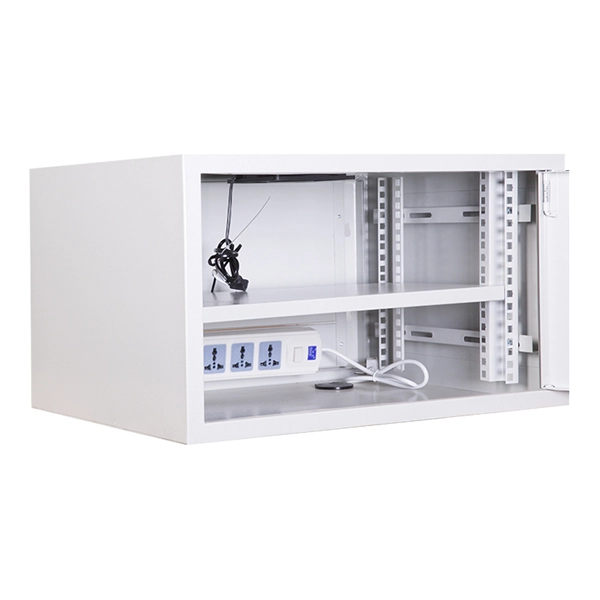
A server rack typically draws between 10-60 amps, depending on its power density, hardware type, and configuration. Kilowatt per rack (kW/rack) is the power assigned to a server rack in a data center. Always calculate amperage using P=V×I and consult. The power demands of server racks can be influenced by several factors, including the number and type of servers, networking equipment, storage devices, and other peripherals. The power requirements of server racks are typically measured in terms of voltage (V), current (A), and power rating. One of the critical parameters for running data centre operations is the kilowatt rating for the power usage at the server rack level. Having some understanding of your rack's power consumption allows you to balance your load, optimize your IT infrastructure, and ensure adequate cooling and power. To help, we have created a handy server rack power consumption calculator tool to help you. Using the steps below, you can see how we made these calculations and understand where the results in the Server Rack Power Consumption Calculator are coming from.
[PDF Version]
Networking equipment housed within the server rack should be installed in the upper portion of the cabinet to simplify cable management. Lightweight, rarely accessed equipment should be placed nearest th.
In this guide, we'll see the tools you'll need, the best and proven practices for server rack setup and network rack setup, and the detailed steps you'll need to follow to achieve an efficient and future-proof infrastructure. If you're planning upgrades or a new deployment, professional structured cabling services can help ensure the foundation is built correctly. Professional rack installation provides several critical advantages: Disorganized racks don't just look bad. They increase downtime risk, slow support. Neglecting to arrange your servers, switches, patch panels, and other equipment can result in breaking the stability of your network. In this blog, you'll get a clear idea about it. It's not just about placing equipment in a rack—it's about doing it the right way to ensure your setup is. This ultimate checklist breaks down the entire process—from initial planning and purchasing to final cable organization and system configuration—ensuring your installation is robust, scalable, and optimized for maximum performance and longevity.
[PDF Version]
To improve this, power can be delivered from overhead, either from cables in trays or (increasingly) through busways which support flexible connectors down to the racks, where power distribution units (PDUs) provide power outlets for individual switches and servers. Power distribution inside a data center rack is more complex than many engineers expect. Each rack must safely deliver stable electrical power to dozens of servers, switches, and storage devices while maintaining reliability, airflow efficiency, and electrical safety. The UPS is used as a backup power source in case of power outages, providing power to the servers for a short period of time to allow them to shut down. From the utility grid to the server rack, Data Center Power Flow moves through multiple layers of protection, transformation, conditioning, and distribution to ensure uptime and reliability. To understand how these systems work together, see our. Data centers get power from devices that direct electricity to servers, networking equipment, and storage systems located within server racks.
[PDF Version]
AIMSP is Singapore's leading AI managed service provider, specializing in AI model deployment, data management, performance optimization, and technical support. Dreamcore AI Workstations are built to deploy seamlessly on Linux (Ubuntu) or Windows, enabling secure, local AI processing without reliance on external cloud services. Keep your models, prompts, and data fully within your environment giving you maximum control, privacy, and performance. Experience the power of top-of-the-line GPUs for your AI models. Our bare metal GPU servers supply the dedicated resources you need. Singapore's AI infrastructure ecosystem is witnessing rapid expansion as the country strengthens its position as a regional digital and data center hub. This page covers our services, how we work and pricing shape.
OSFP 400G Eoptolink's EOLO-134HG-5H-MXX OSFP DR4, 4x100G Optical transceiver module are designed for use in 400 Gigabit links over 500m singlemode fiber. They are operating on 1310nm wavelength, and are compliant with the OSFP MSA. FS provides an expanding portfolio of 400G OSFP/QSFP112/QSFP-DD solutions featuring high-performance, high-bandwidth, and backward compatibility. Click to get your 400G transceiver. Optical modules are optoelectronic devices that perform photoelectric and electro-optic conversions. Optical modules are classified by their packaging forms, with common types including SFP, SFP+, SFP28, QSFP+, QSFP28, QSFP56, QSFP-DD, QSFP112. As hyperscale data centers shift toward AI-optimized fabrics and ultra-high-bandwidth switching platforms, the OSFP (Octal Small Form-Factor Pluggable) form factor has become central to next-generation optical architectures. It features eight high‑speed electrical lanes and comes with an integrated heat sink for superior thermal management. This design allows for higher data rates, improved.
[PDF Version]
Operating Current: I < 100mA Duty Cycle: 45 seconds on, 15 seconds off Dimensions: 12*12*30mm Feature: This is 450nm 50mW pure blue laser module with built-in driver with working voltage 3. 450nm laser is much brighter than 405nm violet/purple laser. Configure the right blue laser module for your application from a wide range of laser module platforms with wavelength, beam shape, output power, and electronic options. ProPhotonix' innovative design and tight tolerances in production ensure reliability and maximum lifetime. We provide various high-quality low-price lasers & optics for OEM and end users. The company is managed by experienced professionals. Specialized in laser, optics, laser parts & machines - CO2 laser, fiber laser, DPSS laser, diode laser, fs & ps lasers, microchip laser, red and blue laser, green laser, single frequency laser, DFB diode, superluminescent diode, meta lens, f-theta lens, beam expander, micro & nano optics, Moire. Modulation Frequency: >500Mhz digital. Modulation Frequency: >500Mhz digital.
[PDF Version]Contact us for competitive quotes on any of our power communication and smart grid products
Get a Quote