
Explore cut-to-size twinwall polycarbonate sheets for hot and cold aisle containment in data centers. Lightweight, impact-resistant, and flame-rated materials that improve cooling efficiency and reduce energy costs. Armstrong aisle containment combines flexible design, strategic sourcing, and American manufacturing to deliver solutions that ensure long-term performance in a rapidly evolving digital world. The Sliding Doors reduce data center. While liquid cooling is critical for managing extreme rack densities, hot aisle containment (HAC) systems capture and isolate hot exhaust air, and cold aisle containment (CAC) systems enclose and direct cold supply air. Both approaches remain essential since most high-density environments still mix. Traditional open aisle data centres use perimeter PAC (precision air conditioning) or CRAC (computer room air conditioning) units to channel cold air up through a raised floor void via grilles positioned in front of the IT cabinets.
[PDF Version]
In 2024, Worthington Armstrong Venture (WAVE), a joint venture between Armstrong World Industries, Inc., acquired all of the assets of Data Center Resources, LLC (DCR) related to the design and manufacture of customizable, modular aisle. NewCold is one of the world's fastest-growing providers of cold chain logistics. We design and engineer our own innovative technology, offering fully integrated, end-to-end supply chain solutions that span automated warehousing, transportation, and proprietary technology. Our energy-efficient. Our aisle containment systems are designed to optimize energy use and enhance airflow management in data centers, both new and existing. Pathway Support Structures ● Vertical Panels ● Cabinet Brackets. Many customers work with a Vertiv reseller partner to buy Vertiv products for their IT applications. Separates supply and return airflow paths. Supports the highest level of containment for maximum efficiency.
[PDF Version]
Cold aisle containment systems use doors at aisle ends, ceiling panels or lids above racks, and structural frames to create enclosed zones where cold supply air flows directly to IT equipment intakes. Without containment, cold supply and hot exhaust air mix throughout the data. Hot aisle and cold aisle containment are foundational concepts in data center design. When implemented correctly, they improve efficiency, reduce energy consumption, extend equipment life, and enhance overall reliability. An enormous amount of energy is used every day to maintain an acceptable intake. Tate's Cold Aisle Containment (CAC) system efficiently captures cold air from the CRAH or CRAC unit via an underfloor plenum, ensuring the I. T equipment is kept at an effective temperature. Double sliding doors are ideal for use on aisles 48” and wider. The center opening doors minimize the overall footprint in both directions and a. n is a best practice solution that separates hot and cold air streams. This method raises the temperature of the air returning to a Computer Room Air Con itioner (CRAC) unit, which allows the unit to operate more eficiently.
[PDF Version]
In fusion splicing, the ends of the fibers are welded together with heat. With mechanical splicing, the fibers are positioned in a self-contained unit where adhesive or a mechanical device holds. When installing a fiber optic network, connectors are required to connect both ends of the fiber optic cable. Common splicing methods include optical fiber cold splicing and optical cable hot fusion splicing. Both techniques have their advantages and are suited for different applications, but understanding which method to use can greatly impact the network's. This is where fiber optic cable splicing—the process of creating a permanent, high-performance join between two fiber ends—becomes critical. For network managers and technicians, a poor splice can lead to significant signal degradation, network downtime, and costly troubleshooting. - Process: The fibres are precisely aligned using a fusion splicing machine, and a controlled arc or laser heat source is applied to melt the fibres. The cold cure method, also known as mechanical splicing, involves the combination of anaerobic adhesive and activator.
[PDF Version]
⭕ Data Center Design: Hot Aisle & Cold Aisle - Length and Width Guidelines ✅ Aisle Length: ➡ When racks or equipment cabinets are aligned to form a continuous aisle, the aisle should not exceed 16 meters in length. ➡ If one end of the aisle is closed or has no personnel. Efficient airflow management in data centers relies heavily on proper Hot Aisle and Cold Aisle configurations. System to include demountable ceiling supported wall panels above the equipment racks and floor supported door assem lies at each end of the contained e quirements: Glazing to meet or exceed ASTM seal the gap between the panels and the cabinets. When implemented correctly, they improve efficiency, reduce energy consumption, extend equipment life, and enhance overall reliability. Hot aisle containment Is the most common method for separating hot and cold air. By channeling hot exhaust away from equipment and toward cooling, data.
[PDF Version]
Custom services let you add overcurrent protection, better sealing against moisture, and modular layouts for future upgrades. Choosing the right materials helps manage heat, resist vibration, and simplify cable routing. The range of applications extends from pure energy distribution in buildings to building automation and through to industrial plants. SMART DISTRIBUTION BOXES FOR FLEXIBLE BUILDINGS. Do not attempt this unless. Submit your requirements or design draft to us, and we'll provide a free design and deliver a high-quality prototype in just 15 days – ensuring your project stays on schedule with speed and precision.
A cabinet with cane doors will hide your wi-fi router without blocking the signal, which is extremely important. Security Concerns: Exposed equipment is vulnerable to dust, accidental damage, and even tampering. Additionally, curious kids or pets can cause serious problems. Cable Chaos: More devices mean more cables, and tangled cables lead to slower troubleshooting and higher downtime risks. Today we'll speak not of an eye-sore but still not very stylish piece that can spoil the interior but is a must in every home – a wi-fi router. How to. This clever IKEA hack transforms a simple IKEA PS cabinet into a fully functional home data center that's both practical and apartment-friendly. Meet 6rylou, a Paris-based hacker who solved the eternal struggle of computer equipment sprawl with a €35 solution that's still going strong after 15. Wi-Fi routers often clash with home decor, standing out as eyesores in otherwise stylish spaces. These essential gadgets, while necessary for modern living, typically feature blinking lights and unsightly antennas that disrupt visual harmony.
[PDF Version]
In this guide, we'll break down everything you need to know to install a distribution box correctly and confidently. Choose the right box based on environment (indoor/outdoor), load capacity, and durability. Check for proper IP/NEMA ratings and material quality. This project involves combining an enclosure, protective devices, and various receptacles into a single, portable, or semi-permanent unit. Whether in a home or an industrial facility, this box keeps your electrical setup organized, functional, and efficient. However, the key to. Here are some steps to follow in building an electric distribution box: Determine the electrical requirements: Before building the electric distribution box, you need to determine the electrical requirements of your home or building. Single Phase Distribution Box generally consists of Double Pole MCBs, Single Pole MCBs, and RCCBs. A distribution box, sometimes referred to as a panel board, distribution board, or breaker panel, is an essential part of electrical systems that makes it easier to distribute electricity throughout a structure.
[PDF Version]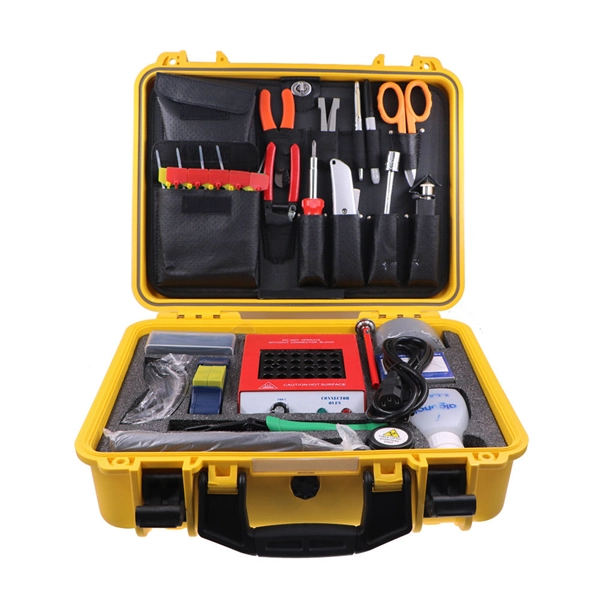
An OLT consists of three major parts: 1. Service port interface function - Provides translation between service interfaces and the TC frame interface of the PON section. 2. Cross-connect function - Provides a c.
Contact us for competitive quotes on any of our power communication and smart grid products
Get a Quote