
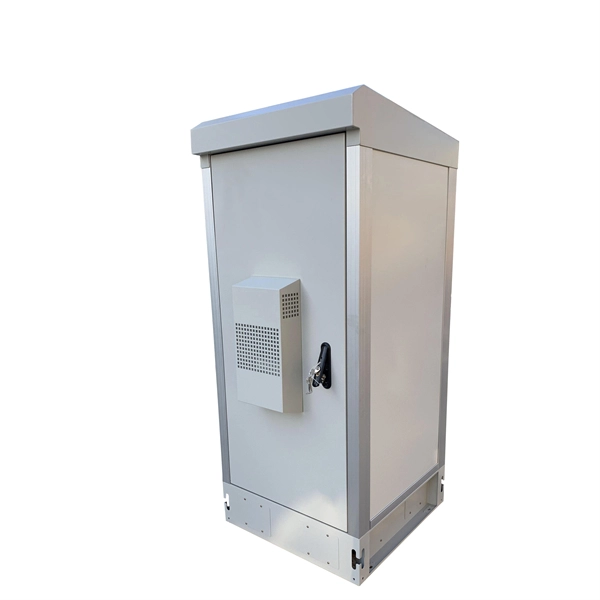
The BBU3900 is a high-performance baseband processing unit that improves signal stability, processing speed, and power efficiency in fiber optic systems, offering better compatibility and performance compared to the WD2BBUC. About This Document About This Document Introduction This document describes the BBU3900 hardware, such as boards, module, ports, cables, and connectors, and the functions of the hardware. Product Version The following table lists the product versions related to this document. • Only when the BBU install in TP48200A and APM30H cabinets, subrack cable claws are configured. Preferentially configured in S19.

Choosing a QSFP cable isn't just about matching the speed. You need to consider: Speed and Standard: QSFP+ (40G), QSFP28 (100G), QSFP-DD (400G). Reach: Do you need short-reach DAC/AOC or long-reach LR4/ZR modules? Connector Type: LC duplex for single-mode, MPO/MTP for parallel. This guide explains everything you need to know about QSFP cables: their types, how they work, when to choose DAC vs AOC, and how to ensure compatibility in your environment. Each QSFP port uses four data. 40G QSFP+ modules are hot-swappable, quad-lane transceivers that deliver 40 Gbps by combining four 10. 3125 Gbps electrical/optical lanes — the form factor and lane mapping are defined in the QSFP+/SFF specifications. Unlike a simple. Amphenol's QSFP copper cable assemblies are designed to meet data center, networking and high-performance computing application needs for high density cabling interconnect systems capable of data rates from 10G/Lane to 112G/Lane transmission rates. Designed to meet the requirements of Small Form. DAC cables use copper conductors to transmit electrical signals directly between QSFP-DD ports.
[PDF Version]
This article provides a system-level comparison of OSFP1600 vs. OSFP-XD, examining their electrical architectures, mechanical and thermal implications, and typical deployment scenarios to help network architects determine which 1. 6T form factor best fits their platform requirements. 6T optical module designed for next-generation data center. 1. 6 Terabits per second—double the 800G standard—over eight electrical lanes running 200G PAM4 signaling each. The. The explosive growth of AI, HPC, and cloud computing has made the 1. 6T silicon photonics (SiPh) solutions. Utilizing MACOM's advanced Etched Facet Technology (EFT) process, MACOM lasers offer. For data center applications, the 1. 6T optical transceiver brings a notable upgrade: it introduces 224G signaling per lane, which is twice the 112G lane capacity of existing 800G transceivers. The core scenario drivers for 1.
This essential guide covers the difference between SFP, SFP+, and QSFP, explains speed classifications (1G, 10G, 400G), and details key buying factors like DOM and third-party compatibility. What Is an SFP Module and What Role Does It Play in Network. An industrial SFP (Small Form-factor Pluggable) module is specifically designed to address these challenges. Compared with standard commercial transceivers, industrial SFP modules support a wider operating temperature range, reinforced hardware construction, and improved resistance to environmental. CXR SFP modules are based on industrial grade components to deliver higher reliability and to enable extended operating temperature range in any host equipment and integration conditions. SFP modules provide LC connectors. These transceivers support data rates up to 2. 67 Gbps and are widely adopted due to their reliability, low power consumption, and compatibility with a vast array of networking equipment.
[PDF Version]
An optical waveguide is a physical structure that guides in the. Common types of optical include waveguides, transparent made of plastic and glass, liquid light guides, and liquid waveguides. Optical waveguides are used as components in or as the transmission medium in local and long-haul systems. They can also be used in.

An OLT consists of three major parts: 1. Service port interface function - Provides translation between service interfaces and the TC frame interface of the PON section. 2. Cross-connect function - Provides a c.
Comprehensive guide for SCADA fibre optic cable selection in substations & BESS. Hi, my name's Pete Suttmeier with Lightera Specialty Solutions division in Avon, Connecticut. Abstract: The design, installation, and protection of wire and cable systems in substations are covered in this guide, with the objective of minimizing cable failures and their consequences. Printed in the United States of America.
AN 835: PAM4 Signaling Fundamentals - This application note explains PAM4 theory and its operation. - 2019-03-12ed the high speed serial data industry to make a considerable shift in approach. Simple, baseband, NRZ (non-return to zero) signal modulation techniques are being left behin rate in half by transmitting two bits in each symbol, as indicated by Figure 1. We distinguish the PAM4 bit rate from its. ery aspect of our daily lives. We have come to take for. In this example, we use INTERCONNECT solutions to study the 4-Pulse Amplitude Modulation (PAM) format. The simulation can be set up from a new simulation, starting at. ded within the MP1900A Signal Quality Analyzer-R Op ation Manual. Ensure that you clearly understand the meanings of the symbols BEFORE using the equipment.
Contact us for competitive quotes on any of our power communication and smart grid products
Get a Quote