
Estimate current required strands, add spares, and then select the nearest standard cable size: Count active duplex links: e., 30 duplex links = 60 fibers. Add 20% spares for testing and future needs: 60 × 1. This guide walks you through the simple decision steps engineers use, the common strand counts on the market, and clear rules-of-thumb for different project types so you choose a cable that fits both today's needs and tomorrow's growth. Begin by listing what the network must support now and in five. Fiber optic cables are used to transmit data and audio signals using light. The laying method is to hang or bundle (wind) erection by means of pole suspension wire. Overhead fiber optic cable is. 1.
This article provides a system-level comparison of OSFP1600 vs. OSFP-XD, examining their electrical architectures, mechanical and thermal implications, and typical deployment scenarios to help network architects determine which 1. 6T form factor best fits their platform requirements. 6T optical module designed for next-generation data center. 1. 6 Terabits per second—double the 800G standard—over eight electrical lanes running 200G PAM4 signaling each. The. The explosive growth of AI, HPC, and cloud computing has made the 1. 6T silicon photonics (SiPh) solutions. Utilizing MACOM's advanced Etched Facet Technology (EFT) process, MACOM lasers offer. For data center applications, the 1. 6T optical transceiver brings a notable upgrade: it introduces 224G signaling per lane, which is twice the 112G lane capacity of existing 800G transceivers. The core scenario drivers for 1.
Choosing a QSFP cable isn't just about matching the speed. You need to consider: Speed and Standard: QSFP+ (40G), QSFP28 (100G), QSFP-DD (400G). Reach: Do you need short-reach DAC/AOC or long-reach LR4/ZR modules? Connector Type: LC duplex for single-mode, MPO/MTP for parallel. This guide explains everything you need to know about QSFP cables: their types, how they work, when to choose DAC vs AOC, and how to ensure compatibility in your environment. Each QSFP port uses four data. 40G QSFP+ modules are hot-swappable, quad-lane transceivers that deliver 40 Gbps by combining four 10. 3125 Gbps electrical/optical lanes — the form factor and lane mapping are defined in the QSFP+/SFF specifications. Unlike a simple. Amphenol's QSFP copper cable assemblies are designed to meet data center, networking and high-performance computing application needs for high density cabling interconnect systems capable of data rates from 10G/Lane to 112G/Lane transmission rates. Designed to meet the requirements of Small Form. DAC cables use copper conductors to transmit electrical signals directly between QSFP-DD ports.
[PDF Version]
This guide covers what AOC cables are, how they work, their advantages over copper solutions, how they compare with DAC cables, and practical selection recommendations. Need help choosing cables? Explore Ascent Optics' QSFP28 connectivity solutions or contact our engineers for a. Explore Amphenol's high-speed Active Optical Cables designed for data centers, HPC, telecom, and storage systems with support from 12G to 400G. Amphenol is a leading innovator in the development and manufacturing of Active Optical Cables (AOCs), delivering high-performance interconnect solutions. When compared to other cables, AOC offers numerous advantages. It provides high transmission rates, long-distance capabilities, low power consumption, lightweight, and ease of use.
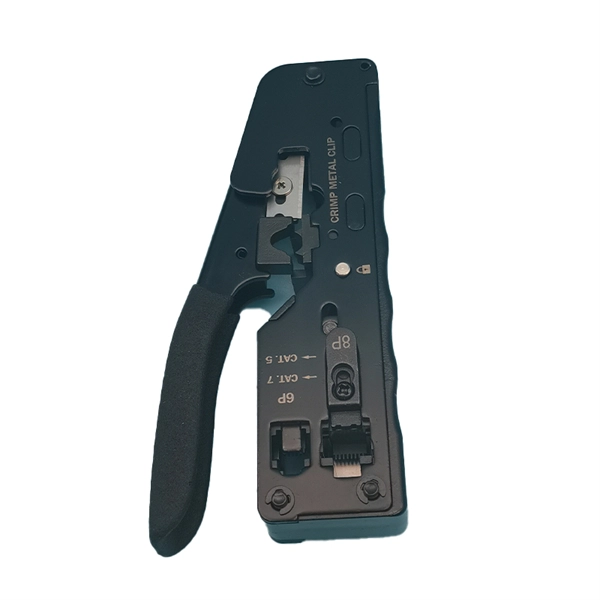
Faster servers, combined with high-performance storage and applications that use increasingly complex computations are causing data bandwidth requirements to spiral upward. As servers are de.
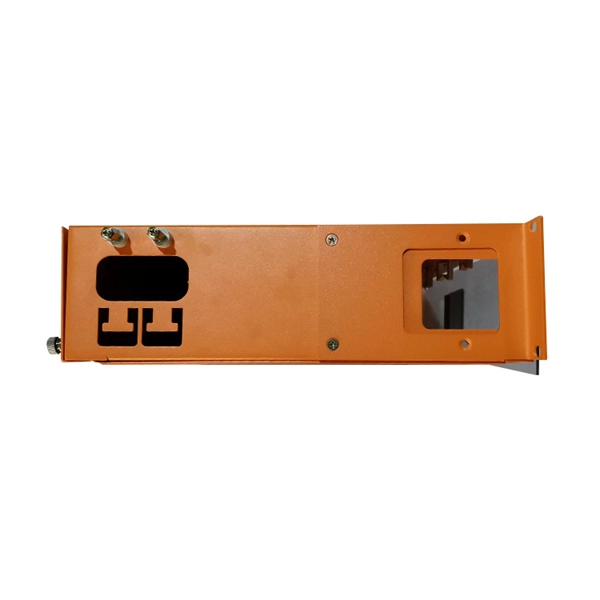
Today, OPGW cables are common in EHV and HVDC systems, forming the communication backbone for SCADA, protection relays, and remote control applications. Traditional Overhead Ground Wires (OHGW) only provided lightning shielding. It serves two primary functions: Unlike traditional ground wires, OPGW contains optical fibers embedded within its metallic structure, allowing power utilities to transmit voice. An optical ground wire (also known as an OPGW or, in the IEEE standard, an optical fiber composite overhead ground wire) is a type of cable that is used in overhead power lines. Such cable combines the functions of grounding and telecommunications. The loose tube construction prevents fibre strain at any stage f installation ardless of the cable design. What is OPGW and Why is it Important? Q: What does OPGW stand for, and what role does it play in transmission systems? OPGW stands.
[PDF Version]Contact us for competitive quotes on any of our power communication and smart grid products
Get a Quote