
OPGW is a dual-purpose cable that serves as both a ground wire for electrical power transmission lines and a communication medium through embedded optical fibers. It is increasingly utilized in high-voltage transmission lines as a functional element that both safeguards the power system and allows data sharing across the grid. This comprehensive guide explains everything you need to know about OPGW technology, its applications, and benefits for power utilities and. OPGW (Optical Ground Wire) is a specialised cable installed at the top of high-voltage overhead transmission lines. Optical Ground Wire (OPGW) integrates optical fibers into an overhead ground wire, combining the functions of a power line ground wire and a telecommunication cable.
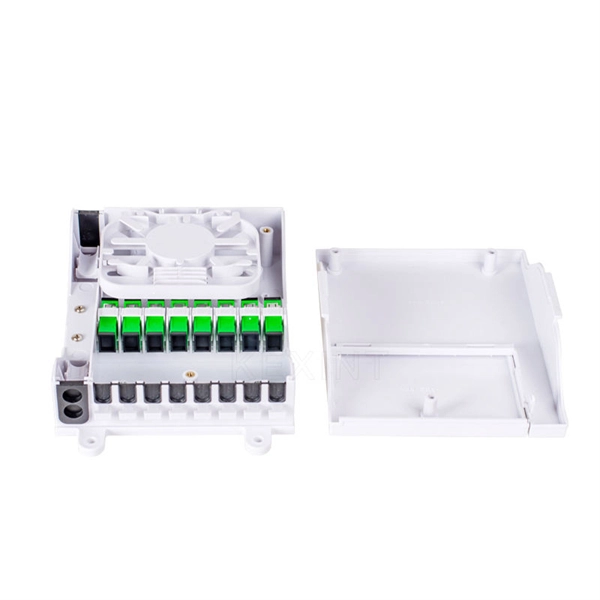
00 per ft depending on terrain, access, and required precision for termination. Total ≈. Typical rates range from $0. Total ≈. CRU provides comprehensive, accurate and up-to-date price assessments and research reports for bare optical fibre across various key regional markets, combined with insights into the factors and events affecting markets. The joint box is made of aluminium alloy and has a maximum c pacity of 240 fibre splices. A pre-moulded neoprene anti-ageing gasket, perfectly inserted in the groove of the cover, provides an excellent sealing entries of the OPGW cables. The anchoring of the joint box. ADSS cable is a non-metallic, self-supporting aerial fiber optic cable designed to be installed on existing poles or power transmission towers without electrical grounding. What Is OPGW Cable? OPGW (Optical Ground Wire) combines optical fibers with a metallic ground wire, serving both lightning. With 19+ years of experience installing fiber-optic cables at over 20,000 locations, we've seen how prices vary based on cable type, project scope, and installation complexity.
[PDF Version]
In response to the problems of low accuracy, high radiation, and high power consumption in industrial UV power detection, the author proposes a design scheme based on a low-power microcontroller M.
Optical power meters can measure the power of both single-mode and multimode fibers. In single-mode fiber, the rays travel down its entire length without any internal reflection at all. Other general purpose light power measuring devices are usually called radiometers, photometers, laser power. Yes, it provides precise optical power measurements in dBm, but it does not support light decay testingthis claim in product listings is misleading and false. Can I trust the APM80C to accurately measure optical power in my daily fiber optic maintenance tasks? 2. How does the APM80C compare to. In this video, we explain how to repair an Optical Power Meter that powers ON but does NOT show any optical power reading. You will learn: • How an Optical Power Meter. Since optical fiber power meters (OFPMs) are a very common type of optical test equipment, NIST has developed and implemented measurement services to help characterize these instruments. The offering ranges from a low cost, hand-held meter to the most advanced dual channel benchtop power meter available in the market.
[PDF Version]
Corning's fixed optical attenuators reduce the optical power within a given optical path without interfering or reducing the optical signal quality. Different types of attenuators operate. Thorlabs has a wide variety of single mode (SM), polarization-maintaining (PM), or multimode (MM) fixed and variable optical attenuators (VOAs). We offer SM and PM electronic VOAs that provide control of the output power with FC/PC or FC/APC connectors. The basic types of optical attenuators are fixed, step-wise variable, and continuously variable.
An optical power meter (OPM) is a device used to measure the power in an signal. The term usually refers to a device for testing average power in systems. Other general purpose light power measuring devices are usually called,, power meters (can be sensors or ), or lux meters. A typical optical power meter consists of a , measuring and display. The sens.
Splitter loss values are "Typical" and include a connector in and out. Use 2×N when two inputs feed the same distribution stage. Common values: 2, 4, 8, 16, 32, 64. 5 dB depending on splitter type. 5 dB. Let's say you have a laser output at 0 dBm (which is 1 milliwatt of optical power). 089 mW (less than a tenth of the. Telcordia and TIA allow a 0. Connector loss is always measured as a mated pair. Ignoring internal imperfections, the ideal insertion loss at each port is given by: In the real world there is always additional excess loss — caused by fusion splices, core alignment, and coupler imperfections inside the. Excess loss is the ratio of the optical power launched at the input port of the splitter to the total optical power measured from all output ports. 2dB/km for single-mode fiber at 1550nm (the primary PON wavelength). A higher split ratio means each output port gets less initial power, limiting how far the signal can travel: A 1:32 splitter divides input power by.
[PDF Version]
NEC 2026 Article 750 consolidates grounding and bonding requirements for all limited-energy systems. Companies involved in electric power distribution use various types of optical cables for communication, monitoring, and control. OPGW. This paper, OPGW Grounding Techniques for Safe Fiber Splicing, outlines critical safety protocols and procedures for preparing Optical Ground Wire (OPGW) splicing on high-voltage transmission lines. In Turkey, separate guidelines are provided for. Abstract: The design, installation, and protection of wire and cable systems in substations are covered in this guide, with the objective of minimizing cable failures and their consequences. An optical ground wire (also known as an OPGW or, in the IEEE standard, an optical fiber composite overhead ground wire) is a type of cable that is used in overhead power lines. An OPGW cable contains a tubular structure with. This tutorial will cover: The three basic design types of OPGW used, the advantages and disadvantages of each, and best practices in design and manufacturing. How to calculate the required fault.
[PDF Version]Contact us for competitive quotes on any of our power communication and smart grid products
Get a Quote