
One of the largest telecommunication providers in the Baltic states, Telia Eesti is using the ADVA FSP 3000 solution, complete with multi-degree ROADMs, to link every major Estonian city in an ultra-high bandwidth long-haul network. 100G QSFP28 is a compact optical transceiver designed for 100 Gigabit Ethernet applications. It follows the QSFP28 (Quad Small Form-factor Pluggable) standard, which enables high-density deployment in switches and routers. From a technical perspective, it uses four electrical lanes, each operating. ESTEL designs and manufactures high‑performance optical transceivers in Europe and in the US, with local technical support and a secure supply chain. The 100G AOC active optical cable refers to the optical. New Undersea Network Delivers Up to 40 Channels of 100G Ekinops, a leading supplier of next-generation optical network equipment, announced today that the Linxtelecom ring, over submarine cable, is now operational and connects Tallinn in Estonia, Helsinki in Finland and Stockholm in Sweden.
[PDF Version]
A practical, engineering-focused guide to planning and installing underground fiber optic cables with the right cable structure, trench design and protection level for long-life, low-risk networks. This guide explains underground fiber optic cable types, installation methods, burial depth, and practical. Fabric innerduct is a flexible textile-based conduit partition system used to organize and protect fiber optic cables inside underground telecom conduits. Match trench method with the correct underground fiber structure (GYTS, GYTA53, GYTY53, micro-duct). Outside plant optical fiber cables are designed for use in the outdoor environment, and should be robust enough to withstand cable bending and twisting action, and attack by.
In hazardous areas, fibre-optic cables, especially directly inserted into flameproof chambers, are considered potentially more critical than copper wires. In this case, it is not relevant how much energy is trans.
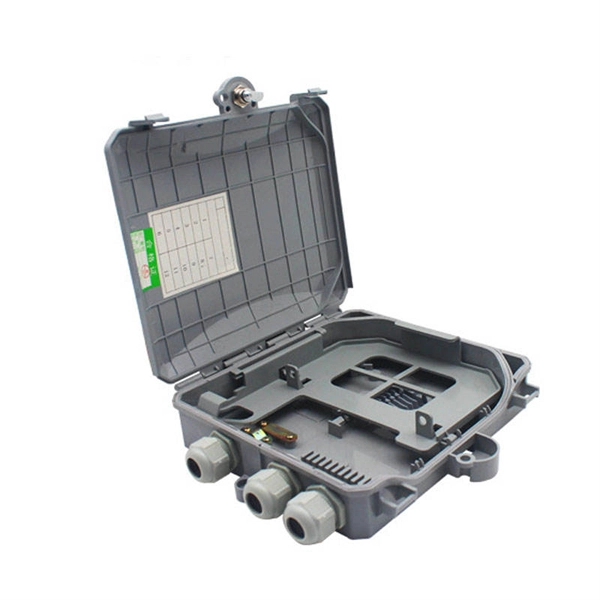
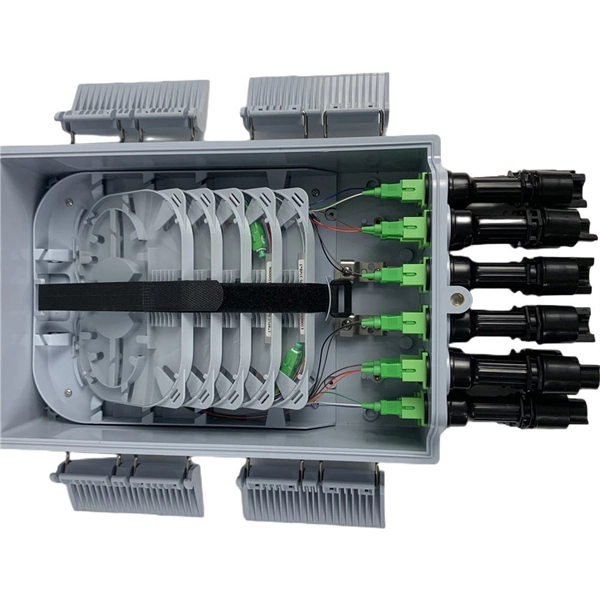
This outdoor 24 ports fiber distribution box provides a protected termination point for feeder cable to connect with drop cable in FTTH and FTTx communication networks. It integrates optical fibre splicing, splitting, distribution, storage and cable connection in the wall mounting. 24-core Plastic Fiber Distribution Box HJ-GF-KSW-24D adopts a separate fusion-splicing and distribution structure, with fusion splicing and optical distribution functions. Made of engineering plastic material, which has mechanical strength. Slide-in-lock fiber optic splice tray with its opening angle above 90°C. Wall-mounting type or a desktop type.
Supporting 10km over single-mode fiber with 4x1310nm parallel optics using PAM4 modulation, this module provides 9 dB link budget at 425 Gbps aggregate throughput. MPO/APC connector with host FEC for enhanced reach. The 4x 100G QSFP-DD FR1 optical transceiver that provides 4 parallel 100GE links over 4 single mode fiber (SMF) pairs via its MPO-12 connector. Each fiber pair link is compliant to 100GBASE-FR1 and thus can support a 400GE to 4x 100GE breakout over 2 km. 5625 GBd PAM4 electrical. Max Power Consumption ≤12W. Provide Professional Compatibility and Parameter Test Reports. DDM (Digital Diagnostic Monitoring) Supported. It is no longer just about basic continuity and short-circuit testing; it requires a systematic verification encompassing high-speed signal integrity, precise power delivery, extreme. Our 4x100G DR4++ QSFP-DD transceiver enables extended-reach parallel connectivity for data center interconnects with breakout capability.
[PDF Version]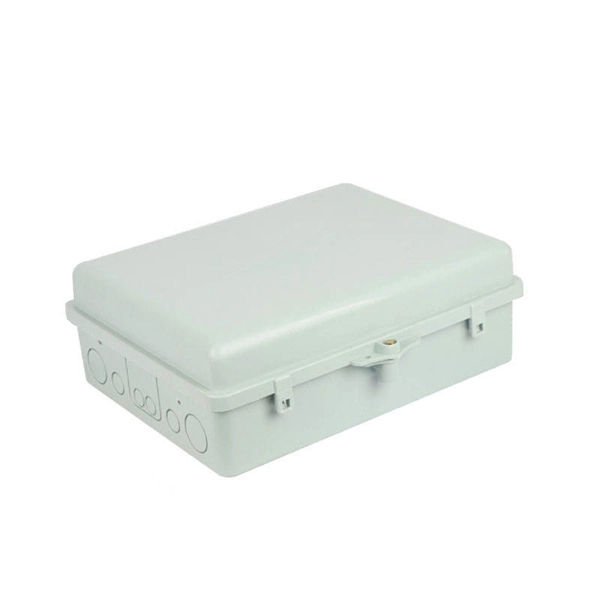
If you have a direct dedicated line from the location where your telephone provider's lines enter your home, commonly known as the point of demarcation or DEMARC, to your DSL modem then you can install a POTS splitter. A splitter is not a filter like a wavelength division multiplexer (WDM). Rarely, there can be two inputs to provide potential redundancy of route. Light power goes in and light power coming out of the various legs is reduced in. In the backbone of modern Fiber-to-the-Home (FTTH) networks, optical splitters serve as the unsung heroes that enable cost-efficient connectivity for millions of subscribers. By dividing a single optical signal from a central Optical Line Terminal (OLT) into multiple outputs for Optical Network. A phone line splitter is a passive hardware device designed to allow multiple analog telecommunication devices to connect to a single telephone wall jack.
[PDF Version]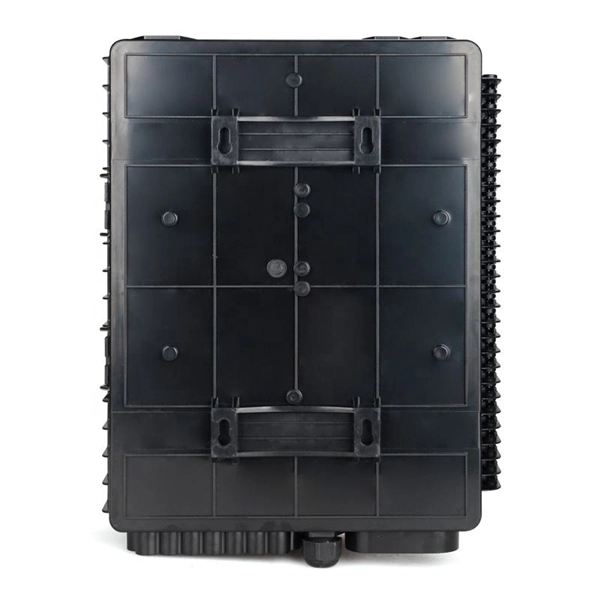
Check with local municipal or county building departments and any relevant Homeowners Association (HOA) for permitting requirements before beginning excavation. Underground cables are pulled in conduit that is buried underground, usually 1-1. 2 meters (3-4 feet) deep to reduce the likelihood of accidentally being dug up. In extreme cold climates, cables may need to be buried at greater depths where there temperatures are colder and frost penetrates to. ed loose tube cable is 600 lbF (2,700 Newtons). Refer to the cable specification sheet or t ion) and “ Installed” (after installation). The following formulas may be used to determine general guidelines for installing Corning Optical Communications fiber optic cable; however, refer to the cable. Fiber optic cable transmits data as pulses of light through thin strands of glass, offering superior bandwidth and distance capabilities compared to traditional copper wiring. This approach provides physical. Recommendation ITU-T L. 101 describes characteristics, construction and test methods of optical fibre cables for buried application.
[PDF Version]
Our Optical Line Terminal (OLT) is the central controller of any Passive Optical Network—efficiently managing data, voice, and video across multiple ONUs/ONTs. Built for speed, reliability, and growth, it sets the standard for high-performance fiber delivery. Explore our range of high-quality GPON, EPON, and XG (S)PON OLT products. High-Performance 16-Port XGS-PON OLT with 40G/100G Uplink CapabilityPLANET XGPL-16000 is a high-density 16-Port XGS-PON Optical Line Terminal ( OLT) designed for next-generation fiber broadband access. for converged service. At the heart of a point-to-multi-point or passive optical network (PON) is the optical line terminal (OLT). Modern OLTs offer communication service providers (CSP) the ability to launch multigigabit services to tens of thousands of subscribers from a single location or just ten. It supports multiple technologies, high bandwidth, and a compact size to enable flexible.
[PDF Version]
They have a unique construction that allows them to be installed on existing power line towers or poles without the need for additional hardware or supports. Utilities began using fiber optics almost as soon as it became available. It was used anywhere communications were needed near power equipment, such as substations or control. Besides traditional cables lashed to messengers, figure-8 cables or ADSS cables, utilities can construct transmission links using optical ground wire (OPGW) or optical power phase conductor (OPPC), cables which include both fiber and metallic conductors, or optical power attached cable (OPAC) which. ADSS fiber optic cable is designed for aerial installations, particularly in high voltage environments. The all-dielectric design eliminates. Electric utilities seeking to increase their fiber connectivity have historically looked up, installing optical ground wire (OPGW) overhead in their transmission rights-of-way (ROWs). Obviously, these fiber cables need to be resistant to electricity, which can be difficult as many aerial cables contain high tensile steel (HTS) for tensile strength. The Fiber Optic Association, Inc.
[PDF Version]Contact us for competitive quotes on any of our power communication and smart grid products
Get a Quote