
2 Core FTTH Drop Cable GJXFH SM 9/125 OS2 G657A1 or G657A2 with 2 FRP in Parallel As Strength member LSZH Sheath Butterfly Flat- Figure 8 Cable FRP With Two parallelFiber Reinforce Plastic (FRP) st.
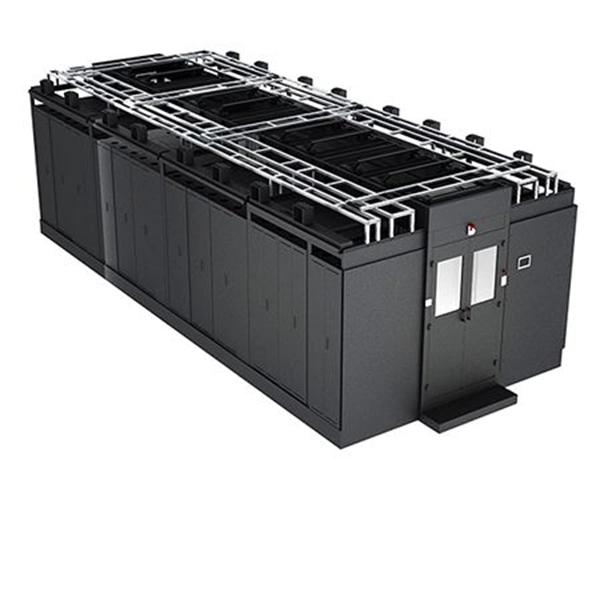
Each cabinet must be equipped with an earthing bar or a ground reference metal sheet. Plastic. To cable a server cabinet correctly, it is therefore also necessary to draw up a plan in advance of where the components should best be installed in the server cabinet. This can not only make maintenance. This article explores how power is connected inside modern data center racks, examining the flow of electricity from facility power feeds to rack PDUs and ultimately to IT equipment. This guide is meant to provide some simple recommendations to quickly solve at least 95% of your problems with physical infrastructure. The Importance of Standardized Cabinet Wiring. Network Cabinet systems systematically address challenges in computer applications such as high-density heat. The process of arranging cables is a creative and, at the same time, technically challenging task that requires logical thinking and the ability to anticipate possible changes in a managed cabling system (MCS). Connect the two power cables for each shelf to different power distribution units (PDUs) in the cabinet or rack.
[PDF Version]
Arrayed waveguide gratings (AWG) are commonly used as in (WDM) systems. These devices are capable of many into a single, thereby increasing the capacity of considerably. The devices are based on a fundamental principle of, which states that of different wavelengths linearly with each other. This means that, if each in an.
Amphenol's QSFP-DD Linear Pluggable Optical (LPO) Transceiver delivers low-latency, high-bandwidth PCIe ® Gen 5. 0 over optical link, enabling scalable server disaggregation and efficient rack-to-rack interconnects ideal for AI/ML and rack-scale data center expansion. OEM SFP modules are small form-factor pluggable (SFP) optical transceivers that are manufactured by original optical component suppliers but sold under the branding and part numbers of major networking equipment vendors such as Cisco, Arista, or Juniper. The focus is on 400G and 800G LPOs using 56GBd lanes. The idea is simple: instead of a DSP (digital signal processor) inside the module – replacing it with transimpedance amplifier (TIA) and a driver chip with high linearity and EQ capability – LPO shifts signal processing into. FS provides 1/2/4G transceivers modules in SFP form factor, supporting transmission distances from 100m to 120km over SMF/MMF fiber and enabling low power and cost-effective connectivity solutions. Purchase from nearby warehouses.
[PDF Version]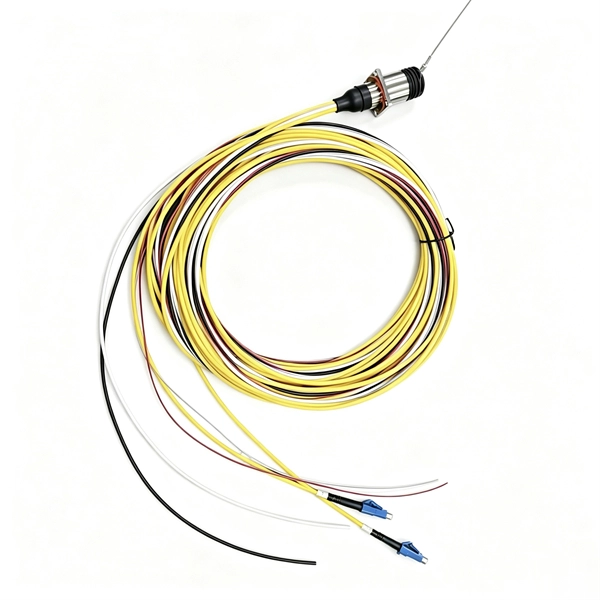
The QSFP28 SR4 transceiver is a high-performing module for SR optical links over OM4 MMF, and is ideal for short-range, multi-lane data communication, and interconnects applications. The QSFP28 LR4 module is designed for extended reach and supports links up to 10km of single mode. This guide provides the definitive roadmap for selecting, deploying, and troubleshooting QSFP28 transceivers while bypassing the painful trial-and-error phase. 1G to 400G solutions for data centers & networks. Shop now!QSFP28 (Quad Small Form-Factor Pluggable 28) is a compact transceiver form factor designed for high-capacity 100G Ethernet. By providing four lanes of 25G, QSFP28 enables a streamlined upgrade path from lower-speed networks, making it a popular choice for scaling data center interconnect (DCI) and. Amphenol's 100G QSFP28 optical modules include SR4, AOC, AOC break out, CWDM4, LR4, ER4 Lite, ER4 and ZR4 series, which adopt LC or MPO optical ports and are compatible with IEEE802. Both short range and long-range transceiver.
[PDF Version]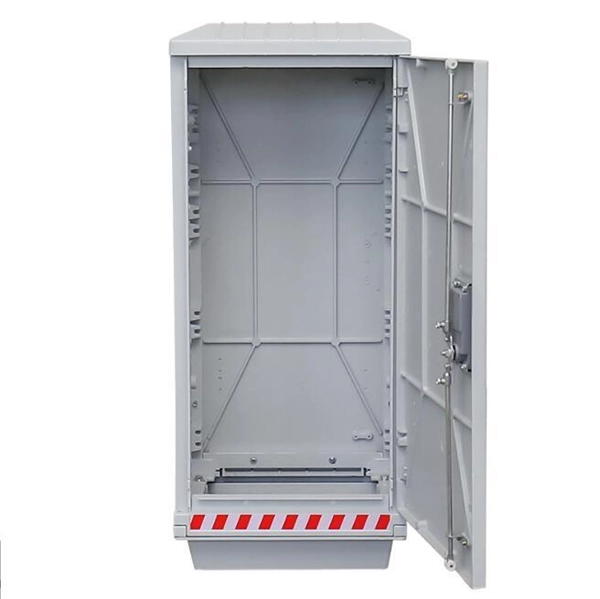
Electric power distribution is the final stage in the. Electricity is carried from the to individual consumers. Distribution connect to the transmission system and lower the transmission voltage to medium voltage ranging between 2 and 33 kV with the use of. Primary distribution lines carry this medium voltage power to located.
An optical power meter (OPM) is a device used to measure the power in an optical signal. The term usually refers to a device for testing average power in fiber optic systems. Other general purpose light power measuring devices are usually called radiometers, photometers, laser power meters (can be photodiode sensors or thermopile laser sensors), light meters or lux meters. A typical optic. SensorsThe major types are (Si), (Ge) and (InGaAs). Additionally, these may be used with attenuating elements for high optical power testing, or wavelengt. A typical OPM is linear from about 0 dBm (1 milli Watt) to about -50 dBm (10 nano Watt), although the display range may be larger. Above 0 dBm is considered "high power", and specially adapted units may measure u. Optical Power Meter and accuracy is a contentious issue. The accuracy of most primary reference standards (e.g.,, Length,, etc.) is known to a high accuracy, typically of the orde.
[PDF Version]
A class of laboratory power meters has an extended sensitivity, of the order of -110 dBm. This is achieved by using a very small detector and lens combination, and also a mechanical light chopper at typically 270 Hz, so the meter actually measures AC light. This eliminates unavoidable dc electrical drift effects. If the light chopping is synchronized with an appropriate synchronous (or "lock-in") amplifier, further sensitivity gains are achieved. In practice, such instruments usually achieve lower absolute acc.
Contact us for competitive quotes on any of our power communication and smart grid products
Get a Quote