

The 1×4 Singlemode Bare Fiber PLC Splitter is a single-mode fiber optic splitter designed to divide an input optical signal into four separate outputs. Featuring a bare fiber design. FS PLC Fiber Optic Splitters, Bare/Blockless/ABS/LGX Splitter/Rack Mount Types, support 1xN light distribution, with low IL and PDL for high-reliability transmission. This compact yet powerful device allows a single optical input to be split into four separate outputs, making it a vital part of passive optical networks (PONs). In this wholesale guide, we'll walk you through everything you need to know about the 1×4 PLC Splitter with SC/APC connectors—its functions, applications, specifications, and why sourcing from a trusted Chinese manufacturer can give you a significant edge. What is a 1×4 PLC Splitter? A 1×4 PLC.
The PLC Modules feature low insertion loss, low polarization dependent loss, and high port uniformity. Planar Lightwave Circuit (PLC) Splitter is a type of passive optical component using silica optical waveguide technology to distribute optical signals from the Central Office (CO) to multiple premise locations, allowing for efficient communication. It offers large output ports at low cost with a compact size, than fused couplers. Compact design High Reliability Customized packing and configuration Available configuration: 1:2–1:64 and 2:4–2:64 Bare fiber Fan-out. Planar Lightwave Circuit (PLC) splitter provides highly stable splitting performance superbly across temperature and wavelength in low insertion loss, low input polarization sensitivity, excellent uniformity, and low return loss. Different splitting ratio is available, 1X2, 1X4, 2X4, 1X8, 2X8.
ABS Box Splitter (PLC Splitter) is an integrated waveguide optical power distribution device based on quartz substrate. It has the characteristics of small size, wide operating wavelength range, high reliability and good uniformity of splitting. It is especially suitable for passive. It is one of the most important passive components in optical. A PLC splitter (Planar Lightwave Circuit splitter) is a device used in fiber-optic networks to split a single optical signal into multiple signals, allowing a single fiber-optic cable to serve multiple users or devices.
There are two main types of optical splitters: fused biconical taper (FBT) splitters and planar lightwave circuit (PLC) splitters. Each has its own advantages and uses, which we'll discuss in the next sections. What Is an Optical Splitter Fiber and Why Do You Need One? At its core, an optical splitter fiber is a device. A fiber optic splitter is a passive optical component that divides a single incoming optical signal into two or more outgoing signals, or combines multiple incoming signals into one. It is. A “splitter” is a power splitter. Typically, but not always, there is one input in and multiple outputs.
Cube beamsplitters require incident light perpendicular to the first surface. In addition, they do not impose an offset on the transmitted light. These exiting beams are differentiated by either their optical power (non-polarizing) or polarization states (polarizing). It is a crucial part of many optical experimental and measurement systems, such as interferometers, also finding widespread application in fibre optic telecommunications.
If you have a direct dedicated line from the location where your telephone provider's lines enter your home, commonly known as the point of demarcation or DEMARC, to your DSL modem then you can install a POTS splitter. A splitter is not a filter like a wavelength division multiplexer (WDM). Rarely, there can be two inputs to provide potential redundancy of route. Light power goes in and light power coming out of the various legs is reduced in. In the backbone of modern Fiber-to-the-Home (FTTH) networks, optical splitters serve as the unsung heroes that enable cost-efficient connectivity for millions of subscribers. By dividing a single optical signal from a central Optical Line Terminal (OLT) into multiple outputs for Optical Network. A phone line splitter is a passive hardware device designed to allow multiple analog telecommunication devices to connect to a single telephone wall jack.
[PDF Version]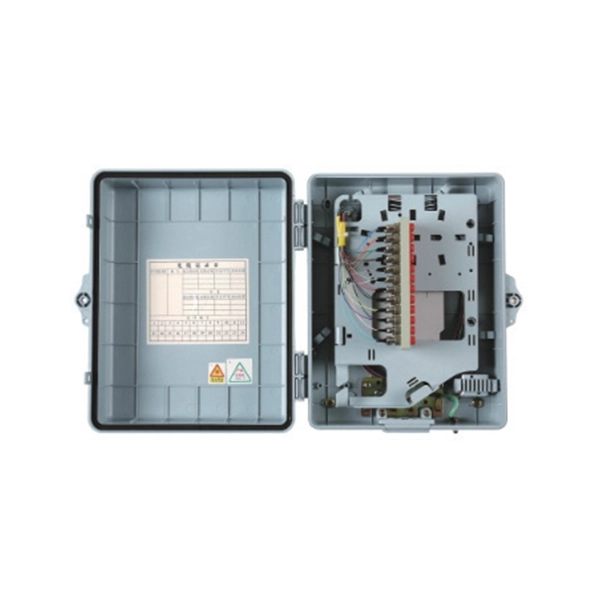
A fiber optic splitter generally consists of input port (s), output ports, couplers, fiber array, and protective casing. Do you know how it works? The development of a passive optical splitter is based on the physical properties of light and the phenomenon of light propagation. An optical splitter is a crucial passive fiber optic device that splits and combines optical signals. It can distribute the optical energy transmitted through a single fiber to two or more fibers in a predetermined ratio or combine the optical energy from multiple fibers into one fiber. Unlike active devices (which require power), splitters operate without electricity, relying solely on the physics of. An Optical Splitter, also known as a beam splitter, is a passive optical device that divides a single input optical signal into two or more output signals. T PON standards such as GPON, XGS-PON and new 25 and 50G standards. These devices help you control light signals well.
[PDF Version]
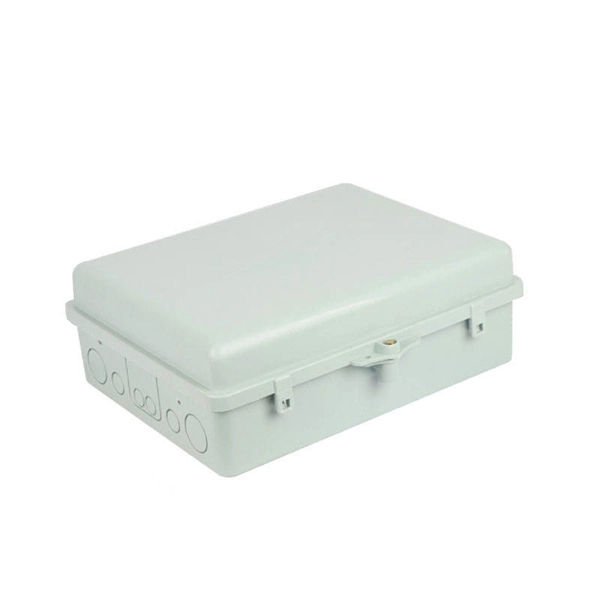
This guide walks through a practical, real-world installation process used in FTTH deployments. It covers not only mounting and splicing, but also how to plan port capacity, manage slack, label correctly, and avoid common installation mistakes. Fiber closure protects spliced fibers in backbone and feeder lines, fiber box (or fiber distribution box) organizes and splits fibers in communities or buildings, and fiber terminal box provides the final termination for indoor drop cables. Understanding how these devices work together helps. Terminal boxes are suitable for a dispersed network structure after deploying the optical splitter. They are composed of fixed cable components, splitter modules, fusion splicing modules, storage areas and more. Installing a fiber optic termination box is one of those jobs that looks simple on paper, but it's easy to do poorly in the field.

A beam splitter or beamsplitter is an that splits a beam of into a transmitted and a reflected beam. It is a crucial part of many optical experimental and measurement systems, such as, also finding widespread application in.
Contact us for competitive quotes on any of our power communication and smart grid products
Get a Quote