
In electric power systems and industrial automation, ANSI Device Numbers can be used to identify equipment and devices in a system such as relays, circuit breakers, or instruments. The device numbers are enumerated in ANSI/IEEE Standard C37.2 Standard for Electrical Power System Device Function Numbers, Acronyms, and Contact Designations. Many of these devices protect electrical. List of device numbers and acronyms• 1 - Master Element• 2 - Time-delay Starting or Closing Relay• 3 - Checking or Interlocking Relay, complete Sequence• 4 - Master Protective. A suffix letter or number may be used with the device number; for example, suffix N is used if the device is connected to a Neutral wire (example: 59N in a relay is used for protection against Neutral Displacement); and suffixe.
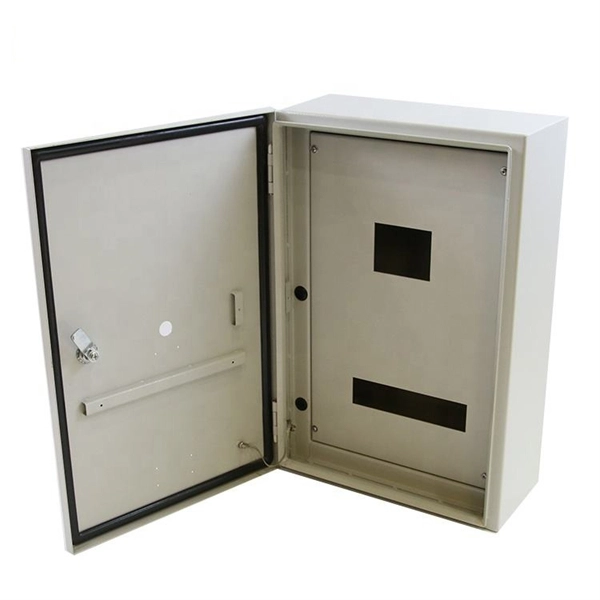
North American distribution boards are generally housed in enclosures, with the positioned in two columns operable from the front. Some panelboards are provided with a door covering the breaker switch handles, but all are constructed with a dead front; that is to say the front of the enclosure (whether it has a door or not) prevents the operator of the circuit breakers from contacting live electrical parts within. carry the current from incoming line (hot) conductors to the breakers.
Planar Lightwave Circuit (PLC) utilizes semiconductor processes such as photolithography, etching, and deposition to create optical paths on substrates, enabling the propagation of optical signals. They are widely used in telecommunications, data centers, and enterprise networks to ensure efficient signal management and. This paper is an overview of recent progress in PLC technology including optical power splitters, arrayed-waveguide gratings, thermo-optic switches, and hybrid integrated PLCs.
The change of low earth orbit temperature (−150 °C −150 °C) has a great influence on the normal operation of communication equipment in space station. In order to make the communication equipment i.
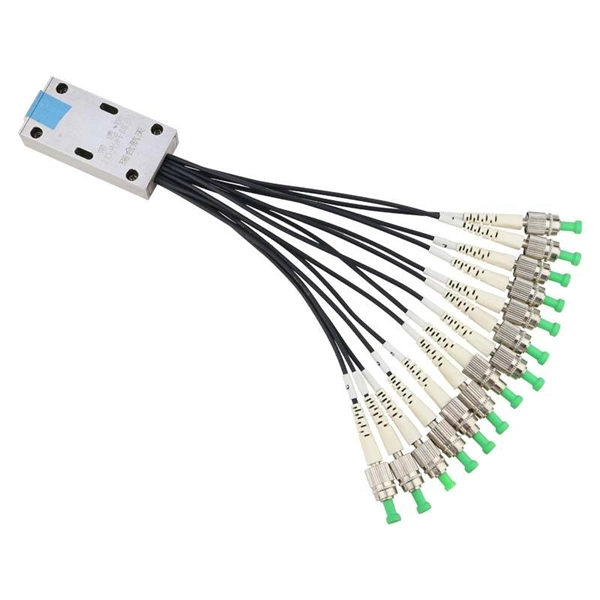
A dual relay is an electrical device that is used to control two separate electrical circuits or devices. Its primary function is to detect abnormal conditions, such as. Siemens is expanding its family of Reyrolle protection devices with the launch of the 7SR46. Complementing an extensive portfolio of protection relays for distribution and industrial grids, the primary application for the Reyrolle 7SR46 is to provide overcurrent and earth fault protection in medium. A protection relay is a crucial component of electrical systems that safeguard infrastructure, employees, and equipment from electric problems and malfunctions. It functions as a watchdog by constantly surveying multiple system components including voltage, current, frequency, and phase angle. The relays operate by opening and closing electrical contacts to either. Protective relays and devices have been developed over 100 years ago to provide “lastline”of defense for the electrical systems. The selection and applications of.
[PDF Version]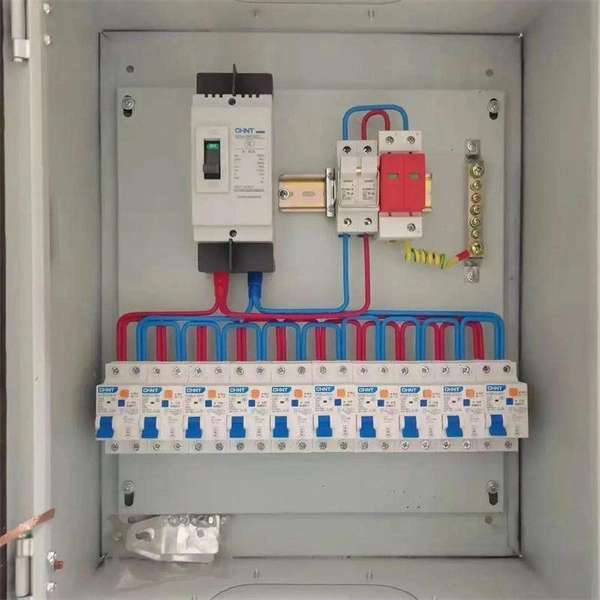
The various protective functions available on a given relay are denoted by standard. For example, a relay including function 51 would be a timed overcurrent protective relay. An overcurrent relay is a type of protective relay which operates when the load current exceeds a pickup value. It is of two types: instantaneous over current (IOC) relay and definite time overcurrent (DTOC) relay.
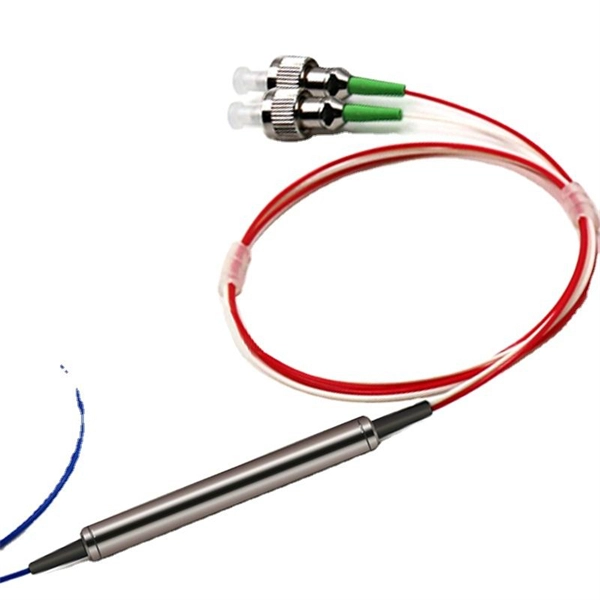
A fiber-optic splitter, also known as a, is based on a of an integrated waveguide power distribution device, similar to a The system uses an optical signal coupled to the branch distribution. The splitter is one of the most important in the link. It is an optical fiber tandem device with many input and output terminals, especially applicable to a passive optical network (,,,.
The various protective functions available on a given relay are denoted by standard. For example, a relay including function 51 would be a timed overcurrent protective relay. An overcurrent relay is a type of protective relay which operates when the load current exceeds a pickup value. It is of two types: instantaneous over current (IOC) relay and definite time overcurrent (DTOC) relay.
Nonreciprocal optical devices, allowing transmission of light with different efficiencies in opposite directions, are key elements for modern optical communication and even quantum information technologies, but elusive to be integrated on a chip to date. Such devices exploring nonlinearity can. Optical nonreciprocity is of fundamental importance for signal processing in modern optical communication systems. An all-fiber device, containing two mutually coupled Fabry-Perot (FP) resonators to realize broken parity-time (PT) symmetry, is demonstrated to achieve nonreciprocal light. This paper presents a novel interferometric fiber optic gyroscope (IFOG) architecture, the Double-Sensitive Non-Reciprocal Polarization Phase Shifter IFOG (DS-NRPPS-IFOG), which intro-duces—for the first time—a fully passive phase biasing scheme capable of simultaneous operation at two quadrature. Faraday circulators (or less specifically optical circulators) are a kind of non-reciprocal optical devices. They are technically related to Faraday isolators, and on a broader scale similar to electronic circulators.
[PDF Version]Contact us for competitive quotes on any of our power communication and smart grid products
Get a Quote