
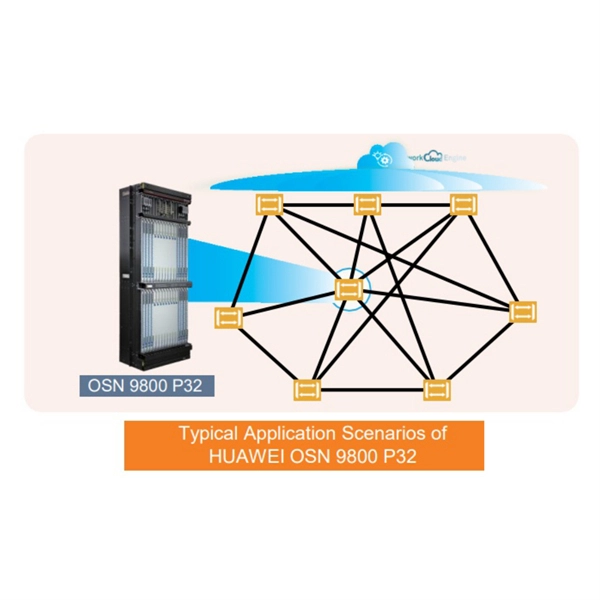
Synchronous Digital Hierarchy (SDH) is a standardized multiplexing hierarchy for transmitting digital signals over optical fiber networks. It provides a flexible and efficient way to transport large amounts of data with high reliability and synchronization. This tutorial addresses the importance of scalable DWDM systems in enabling service providers to accommodate consumer demand. The protocol used in modern networks to satisfy these cravings is Synchronous Digital Hierarchy (SDH) or the almost identical Synchronous Optical NETwork (Sonet) which is primarily used in the U. At low transmission rates, data can also be. Dense Wavelength Division Multiplexing or DWDM is the method which allows multiple wavelengths to be brought to a single-mode fiber, consequently growing the potential of that particular transmission route by using a factor which is equal to the total number of wavelengths that one has added during. In the realm of telecommunications and high-speed data transmission, Wavelength Division Multiplexing (WDM) and Synchronous Digital Hierarchy (SDH) stand as foundational technologies.
[PDF Version]
0 is an essential tool for optimal control of the lighting system in your grow room. It offers the capability to connect up to 250 luminaires of any model. This device provides the possibility to simulate a sunrise and sunset in your indoor. Whether you're a homeowner looking to add a splash of color to your home, or a lighting designer wanting to create a one-of-a-kind commercial space, Pure Smart offers a wide breadth of Smart Lighting solutions, from built-in architectural and strip lighting, to suspensions, sconces, outdoor. With the brand Trelight, PUR-LED® especially covers the control sector of multicolored LEDs. The Trelight-series can be controlled via wallswitch, radio or downloadable app, depending on the product.
At the heart of every optical transceiver lie three essential components, often called the “Three Pillars” of optical communication: Laser — generates light. Modulator — encodes data onto the light. These systems convert electrical signals, which carry data, into pulses of light and then back into electrical signals at the destination.
This laboratory experiment investigates the characteristics of various LEDs using PMMA fibers and the CASSY Lab interface. It focuses on measuring differential resistance and analyzing the relationship between voltage, current, and optical power output in LEDs. The role of the optical transmitter is to convert an electrical input signal into the corresponding optical signal and then launch it into the. ics and Communication Engineering of the College of Engineering, Trivandrum. Achieving amplitude modulation of an analog signal, transmitting over fiber, and recovering the original signal. The care has been taken to make the document error- free.

Fiber optic sensors play a key role in developing the communication system to sense & measure the change within phase, data transmission rate, wavelength, intensity, noise, uneven environmental conditions, extreme heat, high vibration, etc. This article explores the different types of Fiber Optic Sensors, their working principles, and various applications. A sensor is a device that measures a physical quantity and converts it into a. This perspective article delves into the current performance limitations of distributed optical fiber sensors and proposes avenues for future advancements, as envisioned by the author, whose four-decade-long career has been dedicated to this transformative field. From energy. Distributed fiber optic sensing (DOFS) technology transforms standard optical fibers into continuous sensing media, enabling real-time, simultaneous measurement of temperature, strain, vibration, and acoustic signals at any point along tens of kilometers of fiber.
[PDF Version]Contact us for competitive quotes on any of our power communication and smart grid products
Get a Quote