
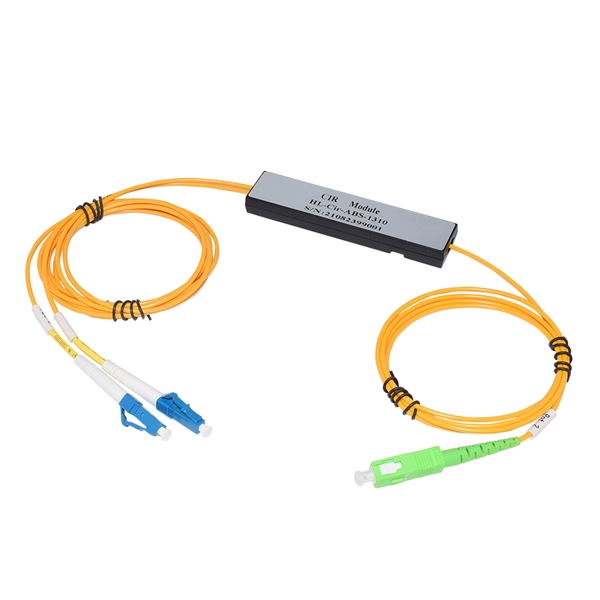
Azerbaijan and Kazakhstan have started deploying the first-ever fiber-optic cable between the countries, Kazakhtelecom CEO Bagdat Mussin announced on his Telegram channel. The cable will run along the seabed of the Caspian Sea, from the Kazakh city of Aktau to the Azerbaijani city. The first-ever submarine fiber-optic cable under the Caspian Sea, enabling ultra-resilient, high-capacity connectivity between Asia and Europe CaspiLink B. company is a joint venture between AzerTelecom and Kazakhtelecom, creating the first fiber-optic infrastructure across the Caspian Sea. The project is expected to be completed by the end of 2026.
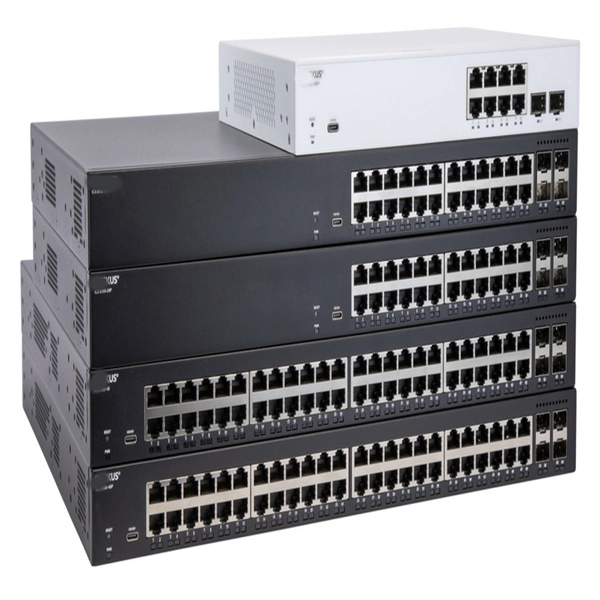
Learn the essential steps to construct a fiber optic network, from planning and design to installation and maintenance. Ensure optimal performance and scalability with AIMITFIBER's comprehensive guide. Each phase has unique challenges and requirements that must be addressed to ensure a high-performance network. It requires obtaining permits and rights-of-way. From selecting the appropriate fiber optic cable and understanding the different types available, to choosing media converters, network cards. This article will give you an overview of the use cases for fiber-optic networking, some of the terms used in fiber networking, and suggestions for setting up a fiber network.
Total Project Costs: For commercial installations, expect costs ranging from $5,000 to $20,000 per mile for underground projects and from $40,000 to $60,000 per mile for aerial installations. These fibers are thin strands, often as small as a human hair, that transmit data as pulses of light. With prices ranging from $1 to over $ 50 per linear foot, depending on the installation method. Buying fiber optic installation services involves several cost components, with total price influenced by length, location, and access. The installation type you choose and the layout of your property determine the total labor and materials needed for your project. You should account for permit. The Fiber Broadband Association has partnered with Cartesian to research the cost of deploying fiber and provide insight on how these costs are evolving over time. Generally, the cost can range from $5 to $15 per foot for aerial installation, while underground installation. buyers typically pay a wide range to run fiber per mile, depending on terrain, rights of way, and installation method. This guide provides realistic low, average.
[PDF Version]
Begin by routing each fibre patch cable through the designated cable pathways. Use structured systems like cable trays, ducting, or raceways to prevent clutter and protect fibres from damage. Correct patch-cord installation is essential for maintaining low insertion loss, stable return loss, and long-term reliability in both indoor and outdoor fiber networks. Proper handling, routing, cleaning, bend-radius management, and connector alignment ensure that the optical link meets design. Incorrect routing, contamination, or physical stress on a fiber optic cable can result in attenuation, signal loss, and even complete link failure. According to data from NS Comm's Fiber Performance Lab (2024 Q4 Test Report), poor installation practices can cause up to 2. 5 dB additional signal loss. Proper cable routing, clean connector mating, and adherence to bend radius guidelines aren't optional—they're essential for sustaining long-term network performance and infrastructure lifespan. Ground Outlet: Cables enter inside the rack from the bottom, meaning the patch panel should be mounted in the lower part inside the rack.
[PDF Version]
The core architecture of a Polarization-Maintaining Fused Coupler comprises strategically aligned optical fibers with distinct stress-inducing elements. These elements, typically composed of borosilicate or similar materials, create controlled birefringence within the fiber. What are some common uses of fiber couplers in fiber optics, including fiber lasers? What are dichroic couplers and how are they used in fiber amplifiers? What is the principle of evanescent wave coupling? What factors influence the coupling strength and wavelength sensitivity in fiber couplers?Polarization-Maintaining Fused Couplers represent a significant advancement in fiber optic technology, serving as essential components in precision optical systems. A stable measurement setup is fundamental for any successful measurement. A major cause of frustration and error is the need to continuously readjust optomechanical equipment because of continuous instabilities. an effective numerical aperture allow a better understanding which other fiber optic components are suitable for the application at hand.
[PDF Version]
A pigtail is used to provide fiber optics with a connector. This creates a stable and reliable. Fiber pigtails are simple in appearance, yet essential in function. They are the bridge between fiber optic cables in the field and the equipment or patch panels that manage them. Get the wrong connector type, the wrong polish, or skip proper fusion splicing technique—and you're looking at elevated signal loss, increased back reflection, and a. A fiber optic pigtail is a short optical fiber cable that has a connector on one end and an exposed (unterminated) fiber on the other.
The S7700 series provide service optimization features like wired and wireless convergence, unified user management, quality awareness (iPCA), H-QoS, and united security. They provide 100 GE ports, support SVF 2. 0, and have superb scalability and reliability. An active optical cable (AOC) is a fixed-length optical fiber with optical modules at both ends. It can be directly connected to an optical port on a device. Table 8-7 lists the models and attributes of. This document is intended for network engineers responsible for network design and deployment. The S7700 design is based on Huawei's intelligent multi-layer switching technology to provide intelligent service optimization methods, such as MPLS VPN, traffic. S7700 What's New Contents Issue 15 (2025-04-09) Copyright © Huawei Technologies Co.
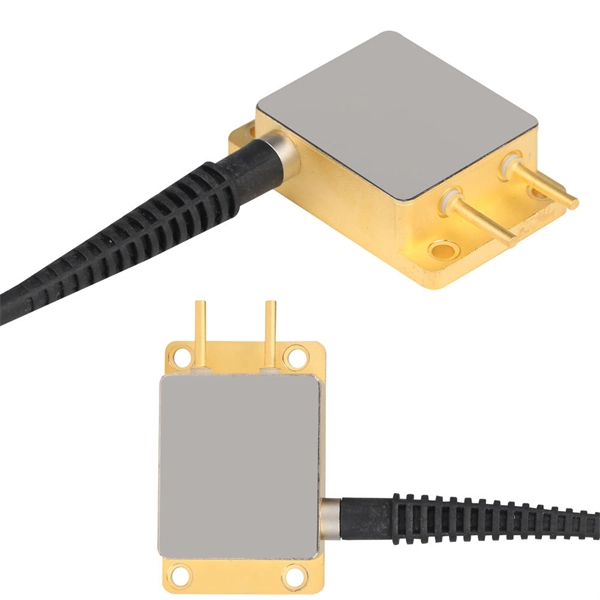
DFB and EML laser chips, along with PIN and APD detector chips, are commonly used in fiber optic communication systems to ensure reliable and efficient signal transmission. They are responsible for generating laser light, which is then modulated to carry information. There are different types of laser chips, including: VCSELs Vertical-Cavity Surface-Emitting Lasers (Vertical-Cavity. For the design and manufacturing of fiber optic transceivers, the choice of packaging methods and optical chip types is one of the key factors. But what. A photonic integrated circuit (PIC) or integrated optical circuit is a microchip containing two or more photonic components that form a functioning circuit. This article will explore the.
Contact us for competitive quotes on any of our power communication and smart grid products
Get a Quote