
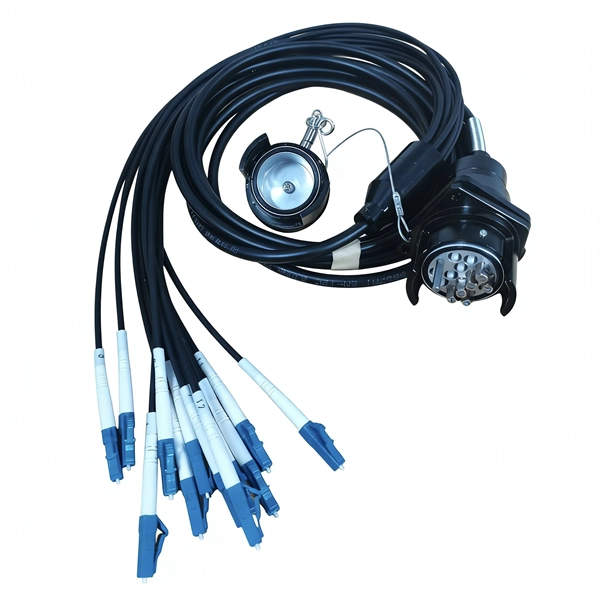
Central loose tube fiber optic cable contains one tube with 2 - 24 fibers, which is filled with water blocking gel. Built with 250 µm fibers (2–24 count), they're offered in plenum, riser, indoor/outdoor-LSZH and outside plant (OSP) ratings. Armor options include all-dielectric, aluminum. The cable must meet the requirements of the National Electrical Code® (NEC)® Section 770. 1 Industrial Ruggedness tested - Applicable Tests: UL 13; UL 444; UL 1277; CSA C22. The cables shall be Tray Rated. 2 Low-Smoke Zero-Halogen – Applicable Flame-Smoke Test: UL 1685. Leviton loose tube fiber optic cables are available in unitube or multi loose tube constructions with a wide range of fiber count, fiber type, and sheath options, including duct, rodent resistant, and direct buried applications. Leviton universal loose tube cables are designed for installation in. The AFL LA-Series artic low temperature loose tube fiber optic cable is designed with low temperature and environmentally harsh environments in mind.
[PDF Version]
This study proposes the container data center with the featured cold aisle containment (CAC) as effective thermal control strategy. In design, the overhead downward flow system is implemented with a he.
The Energy Internet architecture is constructed by six layers, shown in Fig. From top to bottom are Business Layer, Use Case Layer, Operation Layer, Communication Layer, Interface Layer and Appliance Layer. Part of the book series: Advances in Intelligent Systems and Computing ( (AISC,volume 1234)) This article studies the priorities of grid companies for the development of the energy Internet industry from the three major aspects of the external environment, internal capabilities and central. This stage focuses on the exploration, extraction, and primary processing of natural resources, forming the foundation of the energy industry. Conventional Energy Oil and Gas: Exploration, drilling, extraction, and primary fractionation. Its features, such as plug-and-play mechanism, real-time bidirectional flow of energy, information, and money can lead to significant benefits and innovation in electricity. Abstract—The increase of distributed energy, deregulation of energy market together with the growing pressure from energy consumption resulted climate change urges a transformation of the energy sector.
[PDF Version]
As the global demand for clean and reliable energy sources continues to grow, small modular reactors (SMRs) have emerged as a promising solution. These compact nuclear reactors offer a range of potenti.
Key Aspects of the Energy Internet (EI): Decentralization & Democratization: Similar to the internet, EI shifts power from central, fossil-fuel-based generators to distributed, peer-to-peer, and consumer-friendly, renewable energy sources. Energy Internet integrates small-scale renewable energy systems, electric loads, storage devices, and electric vehicles for effective transaction of power backed by emerging technologies such as Internet of Things, vehicle-to-grid, and blockchain. At present, there is no scaled-up working model of. The Internet of Energy (IoE) or Energy Internet is a futuristic evolution of the electricity system, conceptualized as an energy-sharing network. In the network topology, the traditional tree network is transformed to the hierarchical partition network. This older structure meant that you, as the person paying the bill, were entirely passive in the transaction.
[PDF Version]
On June 4, 2025, Chile's government and Google formalized an agreement to build the Humboldt Cable, a submarine fiber-optic line that will directly connect South America and the Asia-Pacific region. Southeast Asia Japan Cable (SJC) 4. This project, first outlined in 2016 and developed through public-private partnership, will run. Desarrollo País' Board of Directors President Luz Granier (L) and Google's Director of Telecommunications Infrastructure Latin America Cristian Ramos pose for a picture after the signing of the agreement for the implementation of the first submarine fiber optic cable between South America and. Google and the Chilean government have signed an agreement to install the Chile Submarine Humboldt Cable, a 14,800 km undersea fiber-optic line linking Valparaíso, Chile, with Sydney via French Polynesia.
One of the largest telecommunication providers in the Baltic states, Telia Eesti is using the ADVA FSP 3000 solution, complete with multi-degree ROADMs, to link every major Estonian city in an ultra-high bandwidth long-haul network. 100G QSFP28 is a compact optical transceiver designed for 100 Gigabit Ethernet applications. It follows the QSFP28 (Quad Small Form-factor Pluggable) standard, which enables high-density deployment in switches and routers. From a technical perspective, it uses four electrical lanes, each operating. ESTEL designs and manufactures high‑performance optical transceivers in Europe and in the US, with local technical support and a secure supply chain. The 100G AOC active optical cable refers to the optical. New Undersea Network Delivers Up to 40 Channels of 100G Ekinops, a leading supplier of next-generation optical network equipment, announced today that the Linxtelecom ring, over submarine cable, is now operational and connects Tallinn in Estonia, Helsinki in Finland and Stockholm in Sweden.
[PDF Version]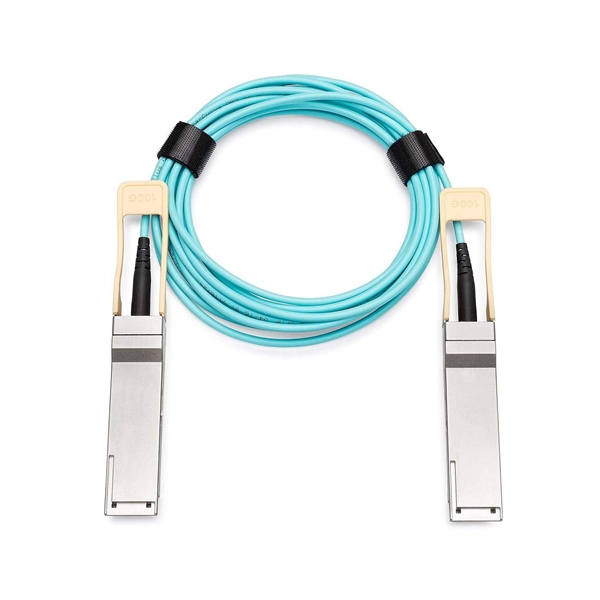
A submarine communications cable is a cable laid on the between land-based stations to carry across stretches of ocean and sea. The first submarine communications cables were laid beginning in the 1850s and carried traffic, establishing the first instant telecommunications links between continents, such as the first which became operational on 16 August 1858. By 1872 all the continents.
Contact us for competitive quotes on any of our power communication and smart grid products
Get a Quote