
That's why IPC developed IPC-A-640, the acceptance standard specifically for optical fiber, optical cable, and hybrid wiring harness assemblies. 109 describes cable construction and provides guidance for the use of optical/metallic hybrid cables, which contains both optical fibres and metallic wires for telecommunication and/or power feeding. Technical requirements may differ according to the installation environment. This hybrid cable design is convenient for networks and customer premises. Hybrid cables permit this directly, with a single cable being able to support both the fiber backhaul and the power to power cameras, Wi-Fi APs, or VoIP phones. Designed to support various communication systems, hybrid copper-fibre cables provide a reliable and efficient solution for modern data.
A hybrid fiber optic cable is a composite cable that integrates traditional glass optical fibers for data transmission with copper wires for electrical power. This innovative design eliminates the need to install separate cables for data and power, streamlining complex deployments. In order to do this, they use some very different types of cables. Obviously, these fiber cables need to be resistant to electricity, which can be difficult as many aerial cables contain high tensile steel (HTS) for tensile strength. Optical technology offers suffi ciently significant advantages to power systems environments so that, to date, electricity industries all over the world have either seriously con sidered or indeed utilised a range of optical systems. There are also disad vantages and drawbacks. The difficul ty. I need to know is there a Code and/or Standard prohibiting the placement of Communication fiber in the same conduit as power for Safety reasons. Some primary examples include optical ground wire (OPGW) and all-dielectric self-supporting (ADSS) fiber optic cables, which were both introduced over 30 years ago.
[PDF Version]
1 and RDSO/SPN/TC/110/2020 Rev. 0 standards, it features 24 single-mode fibers, corrugated steel armor, and UV-resistant HDPE sheath. Designed for underground ducting and direct burial, it ensures long-distance data transmission with minimal loss. An armored fiber optic cable is a cable designed with an extra protective layer�the "armor"�to shield the delicate glass fibers from external damage, such as crushing, cutting, rodent bites, and moisture. This durable casing, which can be made from materials like steel tape, corrugated aluminum, or. Our 24F OFC RDSO-approved armoured optical fiber cable with best price is perfect for backbone networks in railway signaling and telecom. Our product range includes a wide range of m-core 24 core fiber optic cable, unarmoured and armoured fiber optic cable. To convince the diversified requirements of our esteemed clients, we are betrothed in offering Outdoor Optical Fiber Cable. These are widely used to transmit telephone signals, Internet communication, and cable television signals.
[PDF Version]
Fibre-optic Link Around the Globe (FLAG) is a 28,000-kilometre-long (17,398 ; 15,119 ) mostly- that connects the,,, and many places in between. The cable is operated by, a subsidiary of. The system runs from the eastern coast of to Japan. Its Europe–Asia segment was the fourth longest cable in the world in 2008.
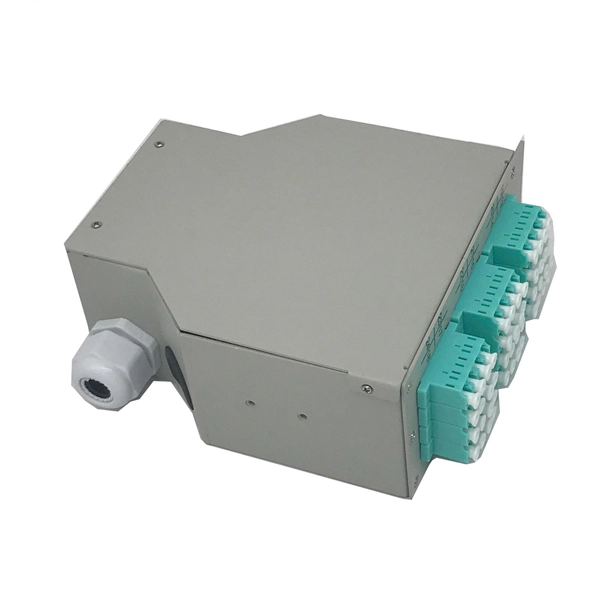
In this post, we'll cover the following aspects of fiber optic cables: Their crucial role in internet systems and computer networking. How they support medical advancements and precision procedures. Applications in industries like automotive, telecommunications, and beyond. It is a flexible and transparent medium made from silica, glass, or plastic. Broad Application Spectrum of Fiber Optic Technology Fiber optic technology is invaluable across various sectors, particularly where high speed. Fiber optic cables have revolutionized the way data is transmitted, offering high-speed, reliable, and secure communication solutions across various industries. From telecommunications to healthcare, fiber optic cables have found a wide range of applications, enabling the seamless transfer of data. Fiber cables form the core of global networks, connecting continents and data centers with near-zero latency and huge bandwidth capacity.
[PDF Version]
Fibre loops, also known as fibre rings, refer to a network setup where each node or building connects to the next in a loop formation using fibre optic cables. This circular arrangement creates a highly efficient, high-capacity network architecture with several notable advantages. This design is leveraged in telecommunications and data infrastructure to combine the high-speed, high-bandwidth properties of fiber optics with a. Fiber rings refer to configurations or architectures used in fiber optic networks, often employed in telecommunications to ensure high-speed data transmission with redundancy and reliability. What Is a Fiber Optic Ring Network? A fiber optic ring network is a physical or logical network topology where devices (usually switches) are. Fiber Optic backbones have been used effectively in industrial Ethernet systems requiring high-speed communications with excellent noise characteristics.
[PDF Version]
Distributed temperature sensing systems (DTS) are devices which measure temperatures by means of functioning as linear. Temperatures are recorded along the optical sensor cable, thus not at points, but as a continuous profile. A high accuracy of temperature determination is achieved over great distances. Typically the DTS systems can locate the temperature to a spatial resolution of 1 m with accuracy to within ±1 °C at a resolution of 0.01 °C. Measurement distan.
Contact us for competitive quotes on any of our power communication and smart grid products
Get a Quote