
Found in 2019, headquartered in Vinh Phuc Province,Vietnam. specializes in manufacturing all kinds of fiber optic cables, optical jumpers and fiber optic connection devices. FPT Telecom International is a prominent telecommunications and IT company in Vietnam that offers a variety of services, including private internet connections and data transmission channels. Their focus on flexible IT infrastructure and commitment to service quality positions them as a key player. Viet Fiber is a leading Vietnamese manufacturer specializing in high-performance Fiber Optic and Copper Structured Cabling Solutions. Established in 2014, we have built a reputation for manufacturing excellence and complete vertical integration, ensuring superior quality control and unparalleled. TBD is among the leading Fiber Optic Installation companies. Whether it's for indoor or OSP, designing or installation, our team has you coverd. We provide Active Optical Cable (AOC), with high quality, excellent service and competitive price. Some of our technical equipment: Optical alignment.
[PDF Version]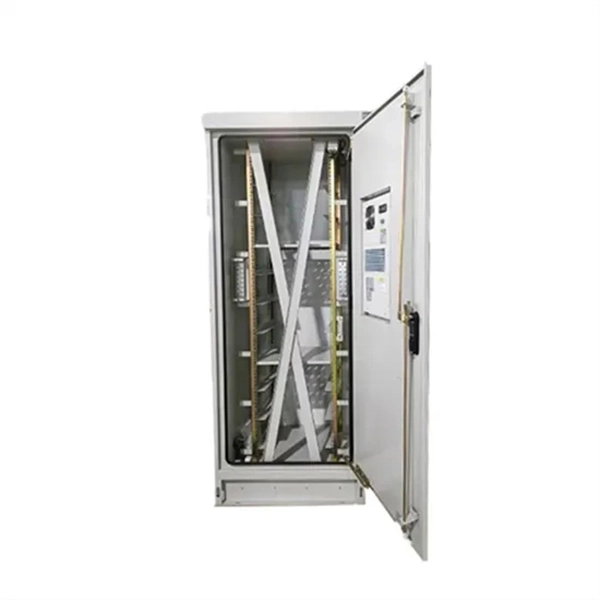
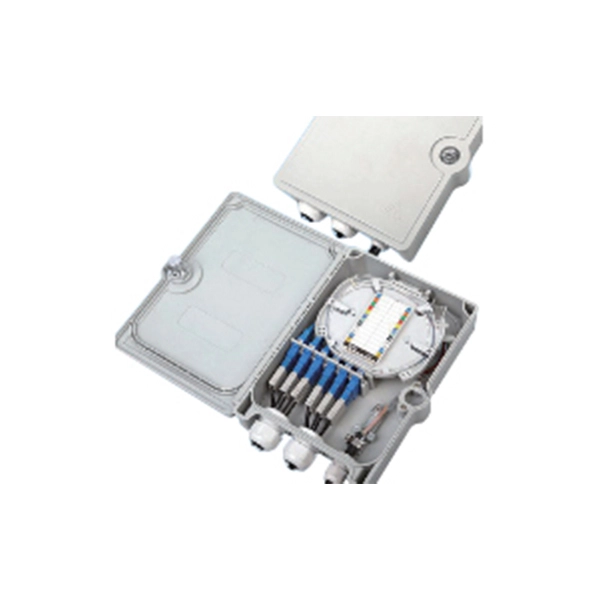
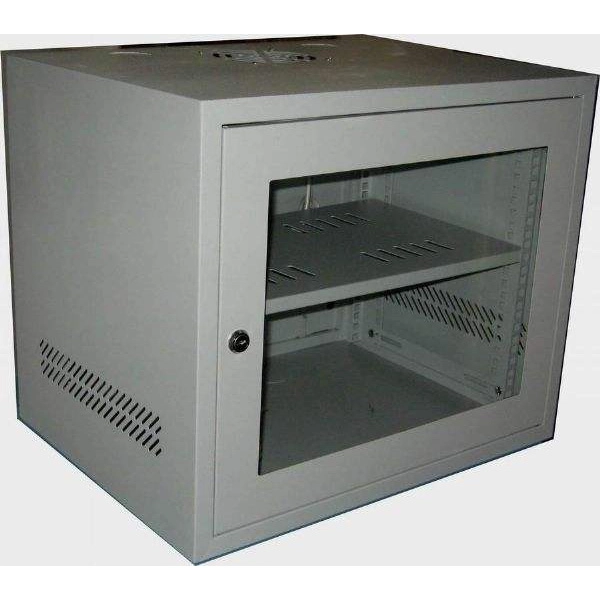
ODF (Optical Distribution Frame) optical fiber distribution frame is an optical fiber distribution equipment specially designed for optical fiber communication equipment room. It provides fiber fixing, splicing, termination, patching, and cable management in telecom rooms, data centers. Achieve successful cable management, handle high amounts of fiber cable and add density to fiber frames with the new DCX Optical Distribution Frame (ODF) System which features innovations like flippable cassettes, modular frame design and multiple configuration options. The user optical cable terminal box installed on the wall, its. Optical distribution frames include floor-standing and wall-mounted cabinets that contain 3U shelves with patch adapters and splice trays. ODF cabinets are used for as an ultra high density central cross-connect point in exchange, head end and customer premises distribution areas. It is designed with precision and functionality in mind.
[PDF Version]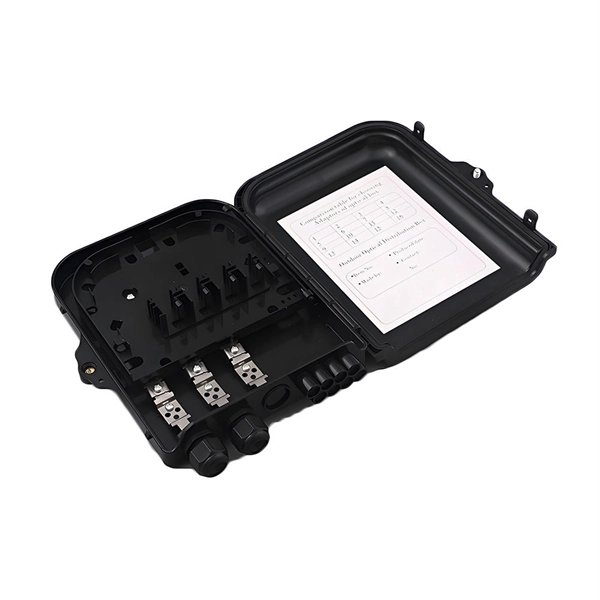
A passive optical network (PON) is a telecommunications network that uses only unpowered devices to carry signals, as opposed to electronic equipment. In practice, PONs are typically used for the between (ISP) and their customers. In this use, a PON has a topology in which an ISP uses a single device to serve many end-user sites using a system suc.
Thin-film filter and PLC based AWG for multiplexing, a full suite of components for optical amplification use, optomechanical or MEMS-based switches for protection or surveillance application, Tap PD for power monitoring and VOA for power management, circulator for. Thin-film filter and PLC based AWG for multiplexing, a full suite of components for optical amplification use, optomechanical or MEMS-based switches for protection or surveillance application, Tap PD for power monitoring and VOA for power management, circulator for. Everything you need to build an optical network from end-to-end. Connect 400G ports with backward-compatible QSFP-DD modules and connect to AI servers with QSFP112 modules. Deploy high-density transceiver modules for data center AI/ML applications and high-performance. Optical modules are a core component of optical fiber communication systems. This technology allows for high bit rate transmission to be switched between various optical lines. They also feature outstanding performance over extended voltage and temperature ranges, while minimizing jitter.
[PDF Version]
For the optical cables that are routed in to or out from a site, the metal reinforcing ribs should be grounded to the optical distribution frame (ODF) or fiber melt tray in the equipment room. However, this does not mean every fiber optic installation is exempt from grounding requirements. The critical distinction lies in. Protective Earthing is a requirement to divert unwanted, potentially hazardous currents from all exposed metallic parts such as equipment chassis, racks, cabi-nets, cable trays, conduit, and patch panels for personnel safety reasons and to avoid potential damage to equipment. Because low frequency. This Applications Engineering Note (AE Note) discusses conventional bonding and grounding practices for conductive fiber optic cable and hardware installations within the scope of the National Electrical Code (NEC). In North America, the primary source.
Optical receivers, in contrast to laser sources, tend to be wideband devices. Therefore, the demultiplexer must provide the wavelength selectivity of the receiver in the WDM system. WDM systems are divided into three different wavelength patterns: normal (WDM), coarse (CWDM) and dense (DWDM).OverviewIn, wavelength-division multiplexing (WDM) is a technology which a number of signals onto a single by using different (i.e., colors) of. A WDM system uses a at the to join the several signals together and a at the to split them apart. With the right type of fiber, it is possible to have a device that does both s.
Many different forms of optical modulation and multiplexing have been employed in coherent optical modules. Some coherent optical modules can fall back to older, simpler modulation techniques such as (NRZ) and/or with 4 levels (PAM-4) when appropriate. This is used, for example, when it is discovered that the module on the other end of the link does not support coherent.
On June 4, 2025, Chile's government and Google formalized an agreement to build the Humboldt Cable, a submarine fiber-optic line that will directly connect South America and the Asia-Pacific region. Chile has taken a huge and historic step forward at the digital level, thanks to the implementation of the Humboldt underwater cable. Our country will thus become the first. According to Image of Chile, the Government of Chile, through Desarrollo País, a state-owned company that promotes infrastructure projects, signed with Google the partnership agreement to create a joint venture company - Humboldt Connect, which will activate and commercialize the fiber optic. Chilean state-owned infrastructure group Desarrollo País has enlisted Debevoise & Plimpton LLP in New York and Carey in Santiago to ink a public-private agreement (PPP) with Google for the development of a landmark submarine fibre optic cable project between Chile to Australia.
[PDF Version]
BiDi transceiver, or Bidirectional or simplex optical transceiver, is an optical module that uses Wavelength Division Multiplexing (WDM) technology to transmit and receive data over a single-strand fiber simultaneously. By reading this blog, you will understand how SFP BiDi technology allows you to save fiber, reduce costs, and simplify installation while enabling your network to increase. The HighPower BIDI® is a bi-directional optical component designed for full duplex communication over a single fiber. The HighPower BIDI® components consist of a FP of DFB laser and PIN diode or APD digital receiver as well as integrated WDM filter for dual wavelength Tx/Rx operation.
A class of laboratory power meters has an extended sensitivity, of the order of -110 dBm. This is achieved by using a very small detector and lens combination, and also a mechanical light chopper at typically 270 Hz, so the meter actually measures AC light. This eliminates unavoidable dc electrical drift effects. If the light chopping is synchronized with an appropriate synchronous (or "lock-in") amplifier, further sensitivity gains are achieved. In practice, such instruments usually achieve lower absolute acc.
Contact us for competitive quotes on any of our power communication and smart grid products
Get a Quote