
This guide highlights essential precautions including wearing protective gear, disconnecting power sources, handling fiber scraps carefully, avoiding face or eye contact, following regulatory standards, using adequate lighting, and keeping food or beverages away from work areas. 01 This procedure provides general information for the installation of aerial fiber optic cables. The methods described are intended for guideline use only, as it is impossible to cover all the various conditions that may arise during an installation. Aerial fiber installation places optical cable on poles or other supports rather than underground. harness on all bucket trucks and aerial lifts. The charter of the FOA was to promote professionalism in fiber optics through education, certification, and. The practices contained herein are designed as a guide for use by persons having technical skill at their own discretion and risk.
[PDF Version]
25 deals with general features in relation to the maintenance and operation of optical fibre cable networks. This revision is intended to be appropriate for the current situation with respect to. Buyers typically see repair costs driven by cable type, damage location, and access challenges. The cost to fix a fiber line often hinges on the fault type, distance, and response time, with price ranges reflecting differing crews and materials. This infrastructure is made up of a wide variety of equipment with very specific implem or new hosting structures: conduits, ducts, gutters, ove pecifiers and design ofices. Your fiber installation ROI depends heavily on maintenance expenses over 15-25 years. Underground systems cost more initially but often save money over their lifetime. Existence. IEC 60794-4:2018 covers cable construction, test methods, optical, mechanical, environmental and electrical performance requirements for aerial optical fibre cables and cable elements which are intended to be used along power lines (OCEPL) as a high bandwidth transport media for communications and.
[PDF Version]
Dielectric loose tube cables or ADSS cables should not be direct-buried, although armored loose tube cables can be direct-buried. Not all ADSS cables are equal for underground use. Some are built with features that resist moisture and corrosion better than others. With metallic central strength members, it offers ease of location while. With an assortment of types being sold—armored, non-metallic, aerial, buried, and self-supporting, as well as ribbon—you will have to know how to choose the right type for each type of application. This depth helps to protect the fiber optic cable from most surface - level mechanical damage, such as from accidental digging or vehicular traffic. In addition, the materials and hardware referenced herein appear as examples, but.
Fiber optic cable installation costs average $4,500 for most homeowners, with most installations ranging from $1,500 to $7,000. The main cost drivers include trenching or aerial deployment, materials, labor hours, and any required permits. This guide presents cost ranges in. What is the real cost of fiber optic cable per foot in 2026? After analyzing 40+ U.
Find the best hot dip galvanized cable tray price list for 2025. Compare supplier quotes, MOQs, and quality features. Our cable management store features wholesale ladders, baskets and trays from leading brands and a network of Chinese manufacturing partners. Avoid accidents, make maintenance easy. Cable support system and profile steel support system provider, focusing on serving high-end customers in offshore oil and gas development, mining, natural gas liquefaction and other industries, providing integrated bridge design and manufacturing services. According to Grand View Research, the market is projected to grow at a CAGR of 6. 8% from 2024 to 2030, reaching a valuation of over $12. 5 billion. Hot dip galvanised (HDG) trunking, also known as hot dipped galvanized trunking, is a specific type of metal cable trunking manufactured in hot-dipped galvanised zinc coated low carbon steel to BS4678 part 1 1978. These trays are coated with a thick layer of zinc through the hot dip galvanization process, offering enhanced protection against corrosion, harsh weather, and heavy industrial.
[PDF Version]
Step-by-step on-site guide: learn how to plan, mark, support, and install cable trays correctly, from shop drawing approval to final checks. en completely installed, without damage either to conductors or structural system use maintain spacing or to keep cables in place when the tray is ect the minimum bend ra-dius for cables as they exit the bottom of the cable tray. This document, based on national standards such as GB 50303 “Code for Acceptance of. Cable tray systems are designed for easy installation and to accommodate power, communications, and signal cabling across a variety of applications. When installed and engineered properly, cable. Whether you're building a commercial setup or upgrading an industrial plant, proper cable tray installation ensures neat wiring, safe access, and easy maintenance. This guide breaks down the process step by step. The beginning of success is to review the Bill of Quantities (BOQ) so that.
[PDF Version]
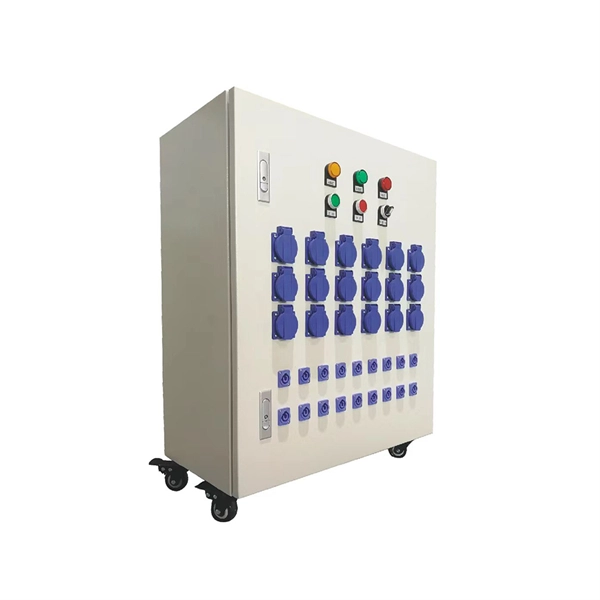
Choose the right box based on environment (indoor/outdoor), load capacity, and durability. Check for proper IP/NEMA ratings and material quality. An electrical distribution box, also known as a power distribution box, panelboard, or consumer unit, is the core of an electrical system. It takes the incoming power and safely distributes it to different circuits throughout your building. Additionally site team will need detailed information of all aspects associated with the installation process in order to complete the job inline with the.
If an EGC cable is installed in or on a cable tray, it should be bonded to each or alternate cable tray sections via grounding clamps (this is not required by the NEC® but it is a desirable practice). Cable tray may be used as the Equipment Grounding Conductor (EGC) in any installation where qualified persons will service the installed cable tray system. The design must comply with relevant regulations and standards.
Standard reference conditions assume an ambient temperature of 30°C (86°F) for cables installed in air. When actual temperatures exceed this baseline, conductor ampacity must be reduced according to NEC Table 310. 15 (B) (1) or IEC 60364-5-52 Table B. This temperature is higher than the minimum operating temperature, and is eather, they should be kept in heated storage for at least 24 hours before instal om summer to winter, jacket movement and shrink. The minimum temperature at which a cable can be safely installed (bent, laid, or pulled) without damaging its insulation or sheath. Example: A PVC cable rated for -5°C installation temperature must not be installed in. Electrical derating is the systematic reduction of a conductor's current-carrying capacity (ampacity) to account for real-world installation conditions that deviate from standard testing environments.
Contact us for competitive quotes on any of our power communication and smart grid products
Get a Quote