
A practical guide to how protective relays detect faults, trip circuit breakers, coordinate protection zones, and improve power system reliability. Core idea: Protective relays monitor electrical quantities and command protective devices to isolate faults or abnormal operating. A protective relay is an intelligent electrical device designed to detect faults in power systems and initiate corrective actions such as tripping a circuit breaker. Its main purpose is to safeguard electrical equipment like transformers, generators, and transmission lines from damage due to. IEEE/IAS/I&CPSD Protection & Coordination WG Chair Jacobs Canada, Calgary, AB rasheek. Recognized under 2(f) and 12 (B) of UGC ACT 1956 (Affiliated to JNTUH, Hyderabad, Approved by AICTE - Accredited by NBA & NAAC – 'A' Grade - ISO 9001:2015 Certified) Maisammaguda, Dhulapally (Post Via. Circuit Breakers: These devices are crucial for automatically disconnecting the.
[PDF Version]
Your home's electrical panel is rated to safely distribute a fixed amount of power, which is measured in Amps. This number will almost always be less than. When planning or upgrading a home's electrical system, understanding the capacity of your electrical panel is crucial. It's responsible for distributing electricity from your utility provider to various circuits throughout your house. Older homes might have 60 or 100 Amp panels, while newer homes commonly have panels that are 200 Amps or larger.
This project describes the complete process of designing a reliable IEC 62056‑21 optical smart‑meter probe, covering hardware engineering, infrared communication tuning, PCB design, 3D‑printed enclosure development, ESP32 integration, and full ESPHome support. This project involves thermal dissipation, peltier cells, a candle, Arduino, ADCs and a lot more! You will learn a lot, the same as I did by making this experiment. Once I have all the data, I will finish the controller PCB as well. As you can see in the video, we. To build DIY optical power meter with standard SFP module and Arduino - Can measure optical power in dbm and watt - Can Enable/Disable TX power output (laser source) - Can debug via UART And Arduino Library - a lib for SFP/DDM interfacing (not only optical sfp transceiver - to interface and. LPM is a laser power meter used for reading the output power of a laser. The circuit includes Arduino Nano board (Board1), 16×2 LCD display LCD1, NPN transistor BC547 (T1), and.
[PDF Version]
An optical module is a small device that moves data using light. It changes electrical signals into light signals and back again. This helps data travel faster and farther than with copper cables. Optical modules are very important for fast internet, cloud computing . An optical module is a typically hot-pluggable optical transceiver used in high-bandwidth data communications applications. As AI models grow more complex and datasets balloon in size, traditional copper-based interconnects are. Optical modules use light to send data quickly and reliably. They are used in fiber optic communication systems to transmit data over long distances with minimal loss and interference.
How to Identify: If you notice that your distribution box's breakers are hot to the touch or smell burning, it's an indication of overheating. How to Fix: Check the load on each phase of the system. A burnout may be intentional or unintentional (spontaneous). During short-term voltage drop. This blog explores common problems associated with 3-phase power distribution boxes and offers practical troubleshooting tips to keep your system running smoothly. When first installed, a piece of equipment can fail due to poor manufacturing, damage during shipping, or improper installation.
Residential ATS models, designed for lower amperage (typically 30A to 200A), usually cost between $300 and $1,200. Let's deep dive into these pricing pressures. Drive smarter procurement and resilient supply chains through enterprise-proven technology 1. Suppliers Unable to Meet the Jump in Demand: In North America, the demand. The cost of an ATS depends heavily on its type and capacity. Commercial and industrial ATS units, which handle higher loads (250A to 4000A or more), can range from $1,800 to over. When planning a standby power setup, buyers typically pay for the switch itself, installation, and any permitting or accessories. Understanding price ranges helps create a. How much does an automatic transfer switch cost depends on several key factors, but here's what you can expect to invest: Total Installation Costs: By Amperage: If you're a facilities manager dealing with frequent power outages or a homeowner in storm-prone South Florida, understanding these costs. This is a comprehensive tool to determine the cost of building a substation or any small portion of it. All material cost is populated.
[PDF Version]
Be sure that the power distribution box has sufficient power provided to it. Long cable runs can result in a voltage drop, which can be solved by using a heavy gauge wire. It takes electricity from the main source and safely sends it to different circuits in a home, office, or industrial setup. Within larger systems, the box often works in tandem with a distribution board, ensuring each circuit branch. Electric power distribution is the final stage in the delivery of electricity.
This article explores the current trends, innovations, and market insights surrounding relay protection, focusing on tools like the secondary injection test set, three-phase relay test set, and single-phase relay test set. able sources such as wind and solar. These clean energy sources, connected through inverters and flexible transmission systems, are transforming traditional grids based on synchronous generators into more flexibl cant challenges to system stability. A big difference between conventional electromechanical and static relays is how the relays are wired. Numeric. IEEE/IAS/I&CPSD Protection & Coordination WG Chair Jacobs Canada, Calgary, AB rasheek. com IEEE Southern Alberta Section PES/IAS Joint Chapter Technical Seminar - November 2016 Protective Relays - Technical Seminar Nov 2016 - Copyright: IEEE 2 Abstract: Protective relays and devices. At the core of a modern substation lies the protection relay: an intelligent electronic device (IED) that plays a critical role in maintaining the stability of the power grid by continuously monitoring voltage, current, frequency, and phase angle.
[PDF Version]
An increasingly common special-purpose OPM, commonly called a "PON Power Meter" is designed to hook into a live PON () circuit, and simultaneously test the optical power in different directions and wavelengths. This unit is essentially a triple power meter, with a collection of wavelength filters and optical couplers. Proper calibration is complicated by the varying duty cycle of the measured optical signals. It may have a simple pass/ fail display, to facilitate easy use by operators wit.
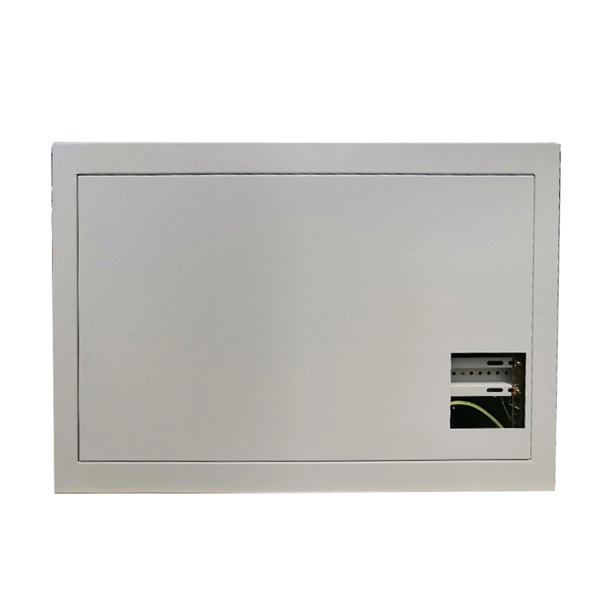
Dual Power Automatic Switch: Switches the power supply from the main grid to generator during outages. Energy Meter: Monitors and records electricity usage. Home / blog / Ultimate Guide to Distribution Boxes (DB Boxes): Types, Components, Applications, and How to Choose the Right One For procurement professionals, electrical contractors, and project managers, choosing the right Distribution Box (DB Box) is a critical decision that directly impacts. The DB panel board controls the flow of electricity. Circuit Breakers: These devices protect circuits by cutting off power during overloads or short circuits, preventing damage. Key components of an electrical. A distribution board (also known as panelboard, circuit breaker panel, breaker panel, circuit breaker, electric panel, fuse box or DB box) is a component of an electricity supply system that divides an electrical power feed into subsidiary circuits while providing a protective fuse or circuit.
[PDF Version]Contact us for competitive quotes on any of our power communication and smart grid products
Get a Quote