
At the heart of an IR diode laser is a p-n junction, a structure formed by two types of specially treated, or “doped,” semiconductor materials. The n-type region has an excess of negatively charged electrons, while the p-type region has an abundance of “holes” that act as positive. IR sensor is a device that uses infrared technology to detect objects or changes in the environment. IR sensors can detect a wide range of physical properties such as temperature, motion, and proximity. This wavelength is longer than visible light, making it invisible to the human eye. An introduction to the concept of Pulse Width Modulation. Learn the basics about LEDs as well as some more advanced topics to help you calculate requirements for projects containing many LEDs. In order to prevent the remote control from causing discomfort to human eyes, almost all the remote control. When you use active illumination with IR LEDs and lasers, you're generating infrared light that bounces off objects and surfaces, letting you detect and image things well beyond human sight. IR LEDs and lasers go about this in different ways.
[PDF Version]
IoT-enabled monitoring — using GSM, Wi-Fi, LoRa or cloud-based dashboards — allows operators to track system performance parameters in real time and respond quickly to faults. It provides reliable data acquisition and alarm functions to ensure safe and efficient operation of solar power plants. The system supports RS485 communication, DC arc fault detection, and shunt. Average Lagos home saves ₦80,000–₦150,000 per month. Payback in as little as 18 months. LiFePO4 battery banks sized for your load. Your family never notices a power cut again. Several Nigerian developers currently rely on imported monitoring units, but local fabrication remains limited.
DOM (Digital Optical Monitoring) is an integrated real-time monitoring solution embedded in SFP optical modules. It collects, transmits, and analyzes operational parameters, providing administrators with actionable insights into link performance. SFP (Small Form-factor Pluggable) is a compact, hot-pluggable network interface module used to connect network devices (switches, routers, firewalls) to fiber optic or copper cables. Optical link diagnostics are central to network maintenance, and DOM technology enables. Digital Optical Monitoring (DOM) technology, a key feature of SFP optical modules, provides real-time, comprehensive parameter support for optical link diagnostics, making it indispensable for troubleshooting. The user's attention is called to the possibility that implementation of this specification may require the use of. This document defines an enhanced Digital Diagnostic Monitoring Interface (DDMI) available in Finisar SFP and SFP+ optical transceivers. (Note: the DDMI also applies to legacy GBIC optical transceivers.
[PDF Version]
To perform an OTDR test correctly, you must: 1. Set core parameters (Wavelength, Distance, Pulse Width); 4. Run the test (Real-time or Average); 5. An Optical Time Domain Reflectometer (OTDR) is the most powerful tool for characterizing fiber optic networks. It works like "radar for fiber optics," sending light pulses down the fiber and analyzing the reflected light to measure loss, locate faults, and verify installations. Automated: In addition to GIS mapping and powerful analytics, the cloud-native EXFO RFTM offers automated test configuration, execution and results, as well as open APIs. Smart: iOLM. FOA "Quickstart Guides" are short, simple guides to basic fiber optic tests. Learn step-by-step how to use FiberComplete PRO on your VIAVI OTDR for maximum. The AQ7277B delivers precise, high-resolution reflection analysis for fiber-optic network monitoring and troubleshooting.
[PDF Version]
Dense wavelength-division multiplexing (DWDM) refers originally to optical signals multiplexed within the 1550 nm band so as to leverage the capabilities (and cost) of EDFAs, which are effective for wavelengths between approximately 1525–1565 nm (), or 1570–1610 nm (). EDFAs were originally developed to replace optical-electrical-optical (OEO), which they have made pra.
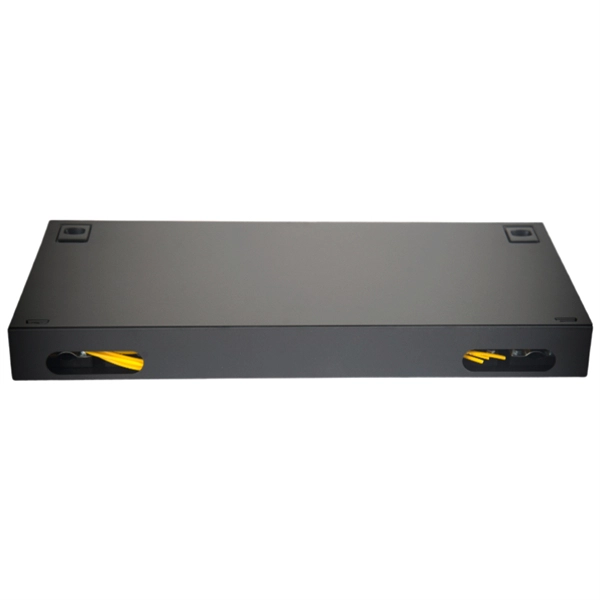
The redundant power supply system provides additional uptime protection for chassis that are used in critical applications. A redundancy module is used to decouple two power supplies and ensures the high availability and productivity of your system. Support load balancin diagnostic information. It provides real-time power monitoring information to the control center and notifies the system and relevant personnel when an abnormality occurs, replacing the. The Cisco ® Redundant Power System 2300 (RPS 2300) increases availability for converged data, voice, and video networks. It helps ensure uninterrupted operation and. Question: I would like to know what options are available to provide dual (redundant) power capabilities to single power (one power supply) devices in our racks.
Teleprotection is the use of communications for power system protection applications. Teleprotection channels, sometimes referred to as pilot channels, coordinate between line protection relays. Important benefits include limiting tripping to faulted. This document supplements PJM Manual 07 which contains the minimum design standards and requirements for the protection systems associated with the bulk power facilities within PJM. Directional distance and overcurrent schemes, interfaced with communication equipment, send and receive logic-based information between relay te minals to determine if the fault is external or internal to the. Protective Relay Definition: A protective relay is an automatic device that senses abnormal conditions in electrical circuits and triggers actions to isolate faults. Types of Protective Relays: Protective relays are categorized by their mechanism (electromagnetic, static, mechanical) and function.
[PDF Version]
Other possible issues include faulty fusion splices, misalignment, or incorrect polarity. This guide reveals the secrets to fusion splicing with little fluff—just proven, straightforward techniques refined from years of work in the field. Intrinsic factors, such as the refractive index of the fiber, are those that are inherent to the fiber itself. There are various possibilities: Mechanical splicing means that two fiber ends are tightly held together with some mechanical means. That is usually done for permanent connections, but it. Problems within a fiber link can occur due to a wide variety of reasons. Damaged or worn latching mechanisms on connectors or adapters are sometimes.
Contact us for competitive quotes on any of our power communication and smart grid products
Get a Quote